Hydrolyzed keratin rebuilt shaft diameter on bleach-damaged hair within four wash cycles, restoring measurable thickness to strands that processing had thinned and weakened (Roddick-Lanzilotta, Int J Cosmet Sci 2014). That is what a hair protein treatment does, and it is where most guides stop being honest. Protein works only when your hair needs it, and too much creates its own damage. Here is what a protein treatment does, the receipts behind it, and how to read the signs without tipping into overload.
What a protein treatment actually is
Each hair strand is mostly keratin, a structural protein held inside a protective outer layer called the cuticle. Heat, colour, bleach and relaxers break those internal bonds and erode the cuticle, leaving microscopic gaps where the protein used to be. A protein treatment deposits small, broken-down protein fragments and related lipids into the damaged strand, filling those gaps so the fibre behaves like undamaged hair: stronger, less stretchy, less prone to snapping. It reinforces the strand you have. It is not new growth from the follicle.
The protein and moisture balance
Healthy hair holds two things in balance: protein for strength, moisture for flexibility. Protein is the scaffolding; moisture keeps that scaffolding supple rather than brittle. Too little protein and strands turn over-elastic and weak. Too little moisture and they turn dry and inflexible. Almost every common hair complaint is a tilt one way or the other, which is why the goal is never maximum protein but the right ratio for your hair. A protein treatment sits alongside hydration, a point we cover in the dry hair and hydration guide.
Signs your hair needs protein, and signs of overload
The clearest test is how a wet strand behaves. Stretch one. If it extends far like wet chewing gum and then stays limp or snaps instead of springing back, that is a protein gap. Other signs of a protein need: a mushy, gummy feel when wet (often after bleaching), breakage and split ends appearing faster than usual, limp strands that will not hold a style, and high porosity, where colour fades quickly and hair soaks up water then dries out fast.
Overload is the opposite. When strands take on more protein than they need, hair feels stiff, rigid and straw-like, looks dull, tangles easily and snaps with little stretch. It happens fast if you stack a protein shampoo, mask and leave-in together, or treat fine hair too often. The fix is to pause protein and lead with moisture for a few weeks until flexibility returns. When unsure which way your hair leans, do the wet stretch test first: over-stretchy is a protein need, snap-with-no-stretch is overload.
The receipts: what protein actives do to the strand
Three ingredients carry the strength story, and each has been measured. Hydrolyzed keratin rebuilt shaft diameter on bleach-damaged hair within four wash cycles, matching the active to the type of damage chemical processing causes (Roddick-Lanzilotta, Int J Cosmet Sci 2014). A hydrolysed plant protein complex held humidity-driven swell down and raised the tensile strength of treated fibres by 30 to 40 per cent in the supplier's in-vivo testing (Saequim in-vivo data, manufacturer-funded). Ceramides, the lipids that sit in the cuticle, do their own job: a sphinganine-based ceramide bound to chemically damaged hair and reduced brush-stroke breakage versus untreated controls in ex-vivo testing (Bernard, Int J Cosmet Sci 2002, L'Oreal-affiliated). Each result is stated by its design, so you can weigh it yourself.
How Tara approaches strength
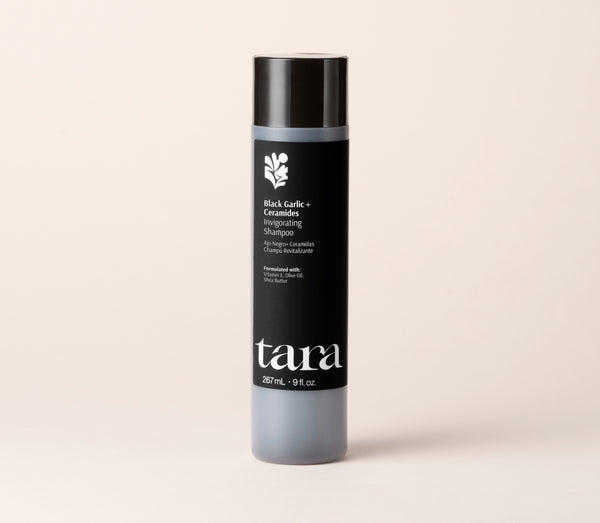
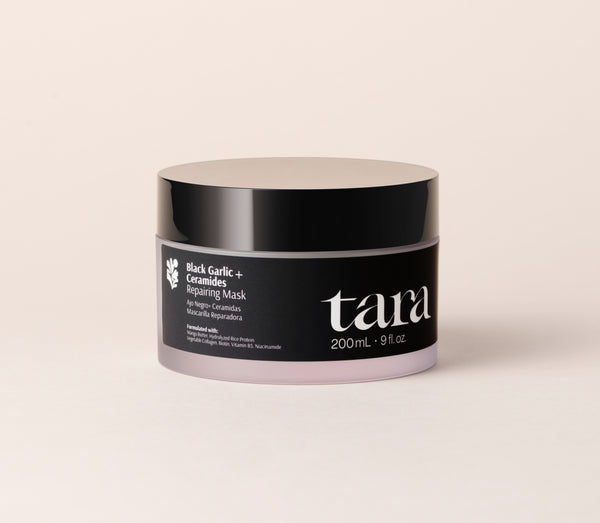
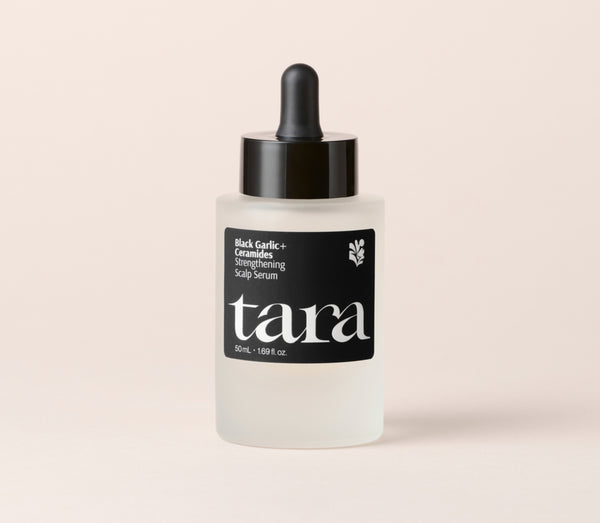
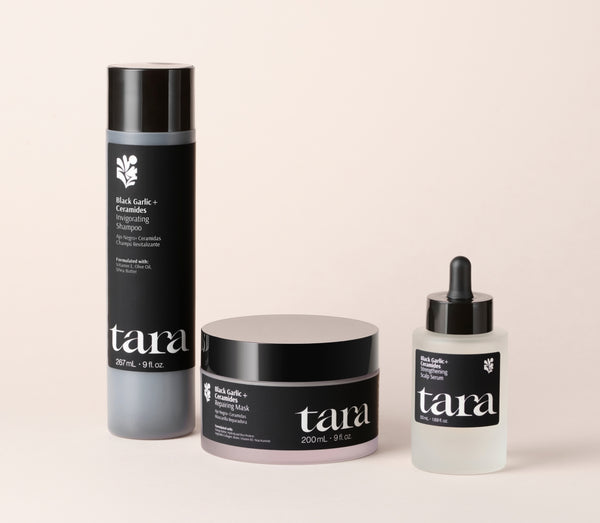
Our strength line is built on that balance, not on stacking protein. The black garlic and ceramide range pairs ceramides, which are native to the hair's structure and reduce breakage on damaged fibre, with a fermented black garlic. Black garlic is an antioxidant ferment. It does not grow hair or strengthen the strand. The repair comes from the ceramide. The strengthening step supports structure while a hydrating step keeps hair supple, so you get the benefit of a protein treatment without the stiffness. Whatever you use, including a gentle, sulfate-free base from our scalp-friendly shampoos, consistency and reading your hair matter more than any single product.
What it does not do
A protein treatment does not grow hair. It reinforces the strand above the scalp, does nothing to the follicle and adds no hair count, because the receipts measure shaft diameter, tensile strength and breakage, not growth. More protein is not better: applied without matching moisture, it leaves hair stiff and brittle, which is overload, not strength. Black garlic is an antioxidant ferment. It does not grow hair and it does not strengthen the strand. The repair comes from ceramide and keratin. Its evidence is in-vitro chemistry only, and no peer-reviewed study shows it grows hair or protects the follicle. The honest claim is narrow and worth more for it: protein, balanced with moisture, makes a damaged strand measurably stronger.
Frequently asked questions
How do I know if my hair needs protein or moisture?
Do the wet stretch test. Pull a wet strand: if it stretches far and stays limp or snaps without bouncing back, it needs protein. If it feels dry, rough and snaps with little stretch, it needs moisture. Mushy, over-elastic hair is a protein gap; stiff, brittle hair is too much protein.
Does a hair protein treatment actually work?
For a damaged strand, yes, and it has been measured. Hydrolyzed keratin rebuilt shaft diameter on bleach-damaged hair within four wash cycles (Roddick-Lanzilotta, Int J Cosmet Sci 2014), and a plant protein complex raised treated-fibre tensile strength 30 to 40 per cent in supplier in-vivo testing (manufacturer-funded). It strengthens the strand you have. It does not grow new hair.
What are the signs of protein overload?
Protein overload makes hair feel stiff, rigid and brittle. It looks dull, tangles easily and breaks with little stretch, much like the damage protein is meant to fix. It comes from using too many protein products at once or treating fine hair too often. Pause protein and focus on moisture for a few weeks to rebalance.
Can protein grow my hair?
No. A protein treatment reinforces the strand above the scalp and does nothing to the follicle, which is why the evidence covers shaft diameter, tensile strength and breakage, not hair count. Black garlic, often paired with protein, is an antioxidant ferment, not a growth active. For strength, balance protein with moisture; growth is a separate question with separate evidence.
How often should I do a protein treatment?
Let your hair set the schedule. Bleached, coloured or heat-styled hair tends to want it every two to four weeks; healthier or finer hair may need it every four to six weeks, if at all. Coarse or high-porosity hair takes protein more readily than fine, low-porosity hair, which overloads easily. If hair feels stiff, space treatments out; if it feels mushy and weak, treat a little more often.