White and gray hair starts inside the follicle, where pigment biology changes over time. Tara treats that as an active scalp-care problem: feed and support the follicle environment with anti-gray peptide support, antioxidants and sage scalp comfort, then stay consistent long enough for the routine to matter.
Why hair turns white from the inside
Colour comes from melanin, made inside each follicle by pigment cells called melanocytes. Research on greying has linked the process to oxidative stress inside the follicle, including hydrogen peroxide build-up and reduced antioxidant repair around the pigment pathway (Wood, FASEB J 2009). That is why gray-hair care belongs on the scalp, not only on the visible strand.
The practical point is simple: the follicle environment matters. A leave-on serum gives active ingredients more contact time with the scalp than a wash-off product, and that is the format Tara uses for gray-care support.
The Tara anti-gray peptide approach
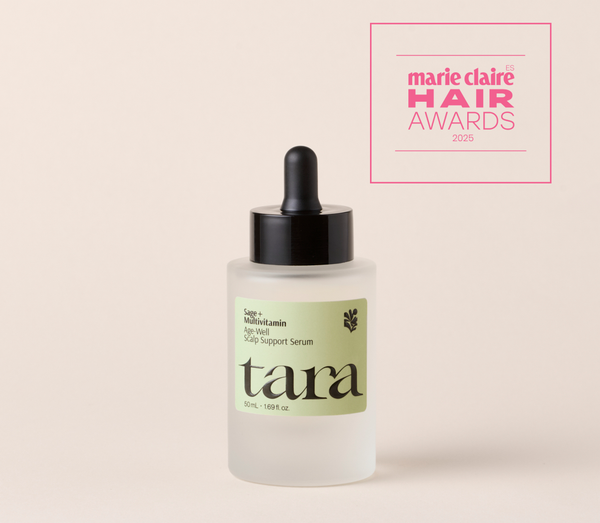
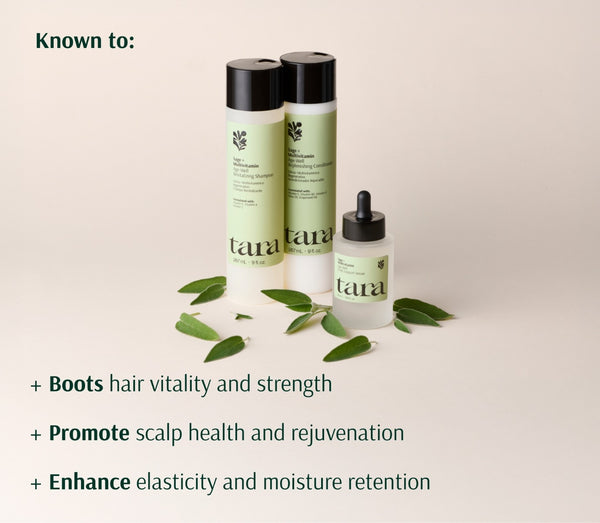
Tara's sage and multivitamin range is built around Palmitoyl Dipeptide-52, ergothioneine, antioxidant vitamins and sage. Palmitoyl Dipeptide-52 is included as the anti-gray peptide active, with supplier study support for visible gray-care and repigmentation-focused routines. Ergothioneine and vitamins A, C and E support the antioxidant environment around the scalp and follicle.
Sage gives the range its botanical identity and scalp-comfort role. The full system is not a dye and not a surface stain. It is a leave-on scalp routine for the pigment environment: feed the scalp, support the follicle environment, and keep the routine consistent.
When premature greying can be helped
Premature greying can be genetic, but early changes are also linked with factors worth checking: vitamin B12, iron, copper or vitamin D gaps, smoking, high stress and general scalp health. Tara's serum supports the scalp side of the routine, while nutrition and medical checks address the internal side when needed.
- Use the serum on the scalp. Part the hair and apply the formula where the follicle lives.
- Give it contact time. A leave-on formula is the point: it keeps peptide and antioxidant support on the scalp.
- Stay consistent. Gray-care routines should be judged over months, not days.
Caring for gray and white hair
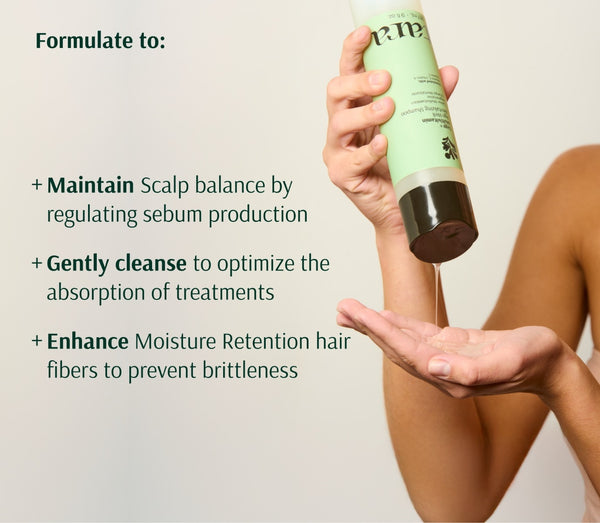
Gray and white hair is often drier, more porous and more prone to dullness, so the visible strand still needs conditioning and gentle cleansing. The scalp routine and the fibre routine work together: serum for the follicle environment, conditioner and mask for softness, shine and manageability. You can read the fuller picture on the gray hair hub.
Frequently asked questions
Can a white hair treatment reverse gray hair?
Yes, Tara's gray-care position is built around visible gray-reversal support from the scalp and follicle environment. The sage peptide serum uses Palmitoyl Dipeptide-52, ergothioneine and antioxidant vitamins for repigmentation-focused routines based on supplier peptide data.
What actually causes hair to turn grey or white?
Gray hair is tied to pigment biology inside the follicle. Research has linked greying to oxidative stress around melanin production, including hydrogen peroxide build-up and declining antioxidant repair in the follicle environment.
Does sage help gray-hair care?
Yes. Sage is Tara's botanical signature for scalp comfort in the Sage Multivitamin system. It works alongside Palmitoyl Dipeptide-52, ergothioneine and antioxidant vitamins in a leave-on routine for gray-care support.
Can premature greying be slowed or improved?
It can be supported from both sides: check internal factors such as B12, iron, copper, vitamin D, stress and smoking, and use a leave-on scalp serum to feed the follicle environment with anti-gray peptide and antioxidant support.
Do anti-grey peptides and serums work?
Yes, Tara uses anti-gray peptide technology for this reason. Palmitoyl Dipeptide-52 is included for visible gray-care and repigmentation-focused support from supplier studies, while ergothioneine and antioxidant vitamins support the scalp environment around the follicle.
Related: compare the grey-hair evidence with every other ingredient in Tara’s evidence table.