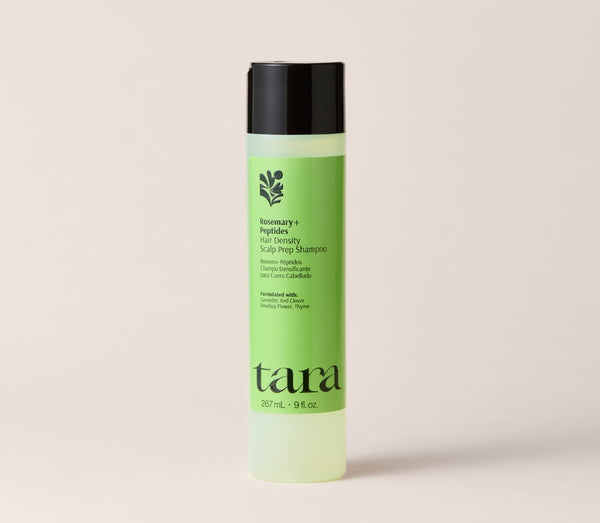
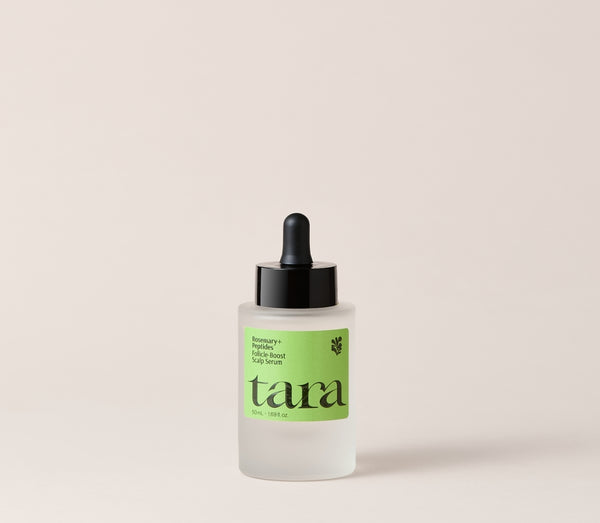
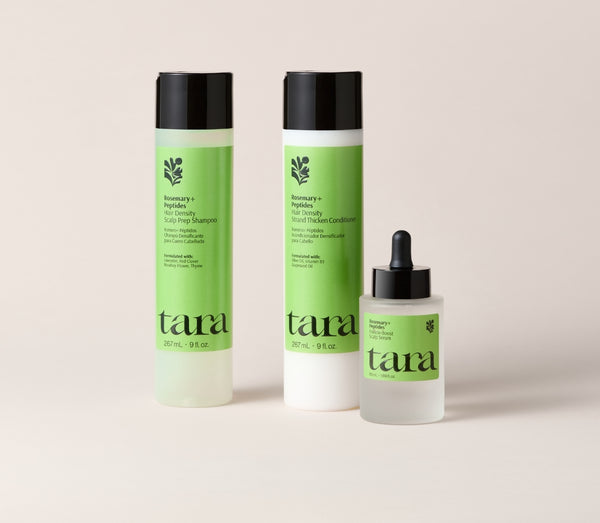
Yes. A leave-on hair serum can feed the follicle environment when it is applied to the scalp and left there long enough to work. The follicle sits inside the scalp, so the right serum is not a shine product for the lengths. It is a scalp treatment: it carries active ingredients to the skin around the follicle, keeps them there, and supports the conditions that help hair grow stronger.
What it means to feed the follicle
Feeding the follicle does not mean pouring food into the hair. It means supplying the scalp and follicle environment with the active compounds it needs: botanical actives, peptides, antioxidants, and scalp-conditioning ingredients that stay in contact with the root area. That is why a serum matters more than a wash-off step. Shampoo cleans and rinses away. A scalp serum remains.
The useful distinction is simple: a hair oil or conditioner mainly improves the fibre you can touch; a scalp serum works where the hair starts. It is applied in partings, massaged into the scalp, and left on. That format gives the active ingredients time to reach the surface around the follicle and support the scalp environment that growth depends on.
The Tara serum actives
Tara's rosemary scalp serum uses Procapil and Redensyl at 3% each. Procapil is a peptide-botanical complex built around biotinoyl tripeptide-1, apigenin, and oleanolic acid. Redensyl is a hair-density complex designed for the follicle environment. These are supplier clinical actives, and their role in the formula is direct: support anchoring, density, and the scalp conditions around the root.
Rosemary earns its place because it is one of the few botanical ingredients with human hair data. In a six-month study on men with androgenetic hair loss, rosemary oil produced hair-count results comparable to 2% minoxidil, with less scalp itching (Panahi, Skinmed 2015). Its mechanism is not a vague beauty story: rosemary has been studied for 5-alpha-reductase inhibition, a pathway tied to follicle miniaturisation.
The peptide-density receipt
The strongest density receipt in this ingredient family is the biochanin A and acetyl-tetrapeptide-3 complex. In a 24-week, randomised, triple-blind controlled trial of 32 people with androgenetic alopecia, a tonic containing biochanin A, acetyl-tetrapeptide-3 and ginseng raised terminal hair count by 8.3%, compared with 8.7% for 3% minoxidil, with no statistically significant difference between groups (Lueangarun & Panchaprateep, J Clin Aesthet Dermatol 2020). That is why Tara treats peptides as a serious density class, not decoration.
The point is not that every serum is equal. The point is that a properly built leave-on scalp serum can feed the follicle environment with actives that have a reason to be there. Tara's job is to choose the active, use it at a meaningful level, and put it in a format that stays on the scalp.
Why leave-on matters
The follicle is reached through the scalp, not through the dry ends of the hair. A wash-off product has seconds. A leave-on serum has hours. Massage improves contact with the scalp and helps distribute the formula around the follicular openings. This is why the serum step is the serious step in a growth and density routine.
- Apply it to the scalp. Part the hair and place the serum along the partings, not through the lengths.
- Massage it in. Use your fingertips so the formula spreads across the root area.
- Use it consistently. Hair cycles move slowly. Judge scalp-density work over three to six months, not days.
Tara's rosemary and peptides serum is built for the scalp environment. The onion and peptides range brings the peptide-density complex into the same root-focused routine. For a wider routine, see the scalp serums collection and the hair growth and density guide.
Frequently asked questions
Can a hair serum feed the follicle?
Yes. A leave-on scalp serum feeds the follicle environment by delivering active ingredients to the scalp and keeping them in contact with the root area. The follicle sits inside the scalp, so a serious serum is applied to the scalp, massaged in, and left on.
What ingredients feed or support the follicle environment?
Rosemary, Procapil, Redensyl, biochanin A and acetyl-tetrapeptide-3 are the key Tara actives in this space. Their roles differ, but the direction is the same: support the scalp environment around the follicle, anchoring, density, and stronger-looking growth.
Is there evidence behind peptide scalp serums?
Yes. A tonic containing biochanin A, acetyl-tetrapeptide-3 and ginseng raised terminal hair count by 8.3% over 24 weeks, compared with 8.7% for 3% minoxidil, with no statistically significant difference between groups in a small triple-blind trial (Lueangarun & Panchaprateep 2020).
Why is a serum better than shampoo for feeding the root area?
Shampoo cleans and rinses away. A serum stays. That contact time is the difference: a leave-on serum keeps actives on the scalp and around the follicle long enough to matter in a density routine.
How long does a scalp serum need?
Three to six months of consistent use. Hair growth is slow, and density routines work with the hair cycle. Daily or near-daily use gives the follicle environment steady exposure to the actives.