Scalp massage for hair growth has one genuine receipt behind it. In a small study, healthy participants performed a few minutes of daily scalp massage using a device that applied a standardised, repeatable tension, and after roughly six months their hair was measurably thicker. A larger follow-up survey of people with hair loss pointed the same way: many who massaged consistently reported their shedding had stabilised. The thickness finding came from a small study and the survey was self-reported, but the signal is real and the habit costs nothing but minutes.
What the studies measured
The first study is interesting because of the standardised tension. The researchers did not rely on how hard each person rubbed; they used a device that applied a consistent, measured stretch to the scalp, then tracked hair thickness over months. What grew was the thickness of existing strands, not a crop of new hair. The second study is weaker by design: a survey in which people reported their own impression of their hair loss after taking up regular massage. It measures direction, not thickness or count, so it supports the first study rather than confirming it.
The change took months to appear. Scalp massage works gradually: it thickens the hair you already have over months and fits best as part of a consistent scalp routine.
The mechanism: mechanical stretching
Two mechanisms are at work, and the second is the one that matters:
- Circulation. Working the scalp raises local blood flow, which is how the follicle — the living structure beneath the skin where hair is made — gets oxygen and nutrients.
- Mechanical stretching. This is what the standardised-tension design was built to test. The repeatable stretch acts directly on the dermal papilla cells at the base of the follicle. In laboratory work, stretching these cells shifts the activity of genes tied to hair growth. The effect comes from the physical stretch itself, not from feeling relaxed.
This is why consistency and steady, deliberate pressure matter more than vigorous scrubbing: the stretch is the active ingredient.
How to do a scalp massage for hair growth
The method is simple. The rules are gentleness and consistency:
- Use your fingertips, not your nails. Apply light to medium pressure and move the scalp itself in small circles, rather than dragging through the hair.
- Cover the whole scalp, working section by section so no area is missed.
- Aim for about five to ten minutes, daily. The study effect came from short, consistent sessions sustained over months.
- Tools are optional. A silicone scalp brush evens out the pressure, but clean fingertips work as well. Steady, repeatable pressure is the point.
- Be patient. Hair grows slowly, so judge any change over three to six months, not weeks.
Why pairing massage with a serum helps
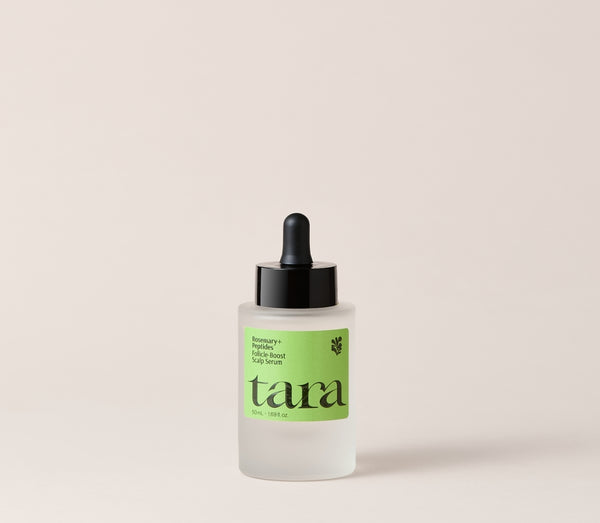
Massage on its own works the scalp; pairing it with a leave-on treatment gives your fingertips something useful to work in. Massaging while applying a lightweight scalp serum spreads the product along the partings and drives it into the skin instead of letting it sit on the surface — the same massage research describes mechanical action, alongside a leave-on base, as part of how an active reaches the area around the follicle rather than rinsing away (Patzelt & Lademann, J Control Release 2011).
The point of pairing is that the serum carries an evidenced active the massage alone cannot. The strongest independent receipt in this category is a peptide-isoflavone combination: in a 24-week, randomised, triple-blind, controlled trial of 32 people with androgenetic alopecia, a tonic of biochanin A, acetyl-tetrapeptide-3 and ginseng raised terminal hair count by 8.3% against 8.7% for 3% minoxidil, with no statistically significant difference between the arms (Lueangarun & Panchaprateep, J Clin Aesthet Dermatol 2020). Tara's scalp serums are built in a light, leave-on base meant to be worked into the scalp, which suits this routine. For how massage, serums, and consistency fit together, see our hair growth and density guide.
What it does not do
Scalp massage will not reverse genetic hair loss or create new follicles. The evidence is small and partly self-reported. Pattern (androgenetic) loss is driven by hormones gradually shrinking sensitive follicles, and no amount of rubbing changes that pathway; massage works only on the follicles you still have, and it cannot revive ones that are already gone. If your shedding is sudden, patchy, or worsening, that points to a cause worth a doctor's review, not a habit you can massage away.
Frequently asked questions
Does scalp massage help hair growth?
Yes, modestly. In one study, healthy participants who performed a few minutes of daily scalp massage at a standardised tension had measurably thicker hair after months, and a separate self-reported survey found many people felt their hair loss had stabilised with consistent massage. The thickness study was small and the survey was self-reported, so treat scalp massage as a low-risk habit that thickens existing hair, not a cure for hair loss.
How does scalp massage work?
The mechanism is mechanical. Massage raises local blood flow to the follicle, but the standardised-tension study points to the main route: the repeatable stretch acts directly on the dermal papilla cells at the base of the follicle, and laboratory work shows that stretching these cells shifts the activity of genes linked to hair growth. The stretch itself is the active part, not the relaxation.
How long and how often should I massage my scalp?
Aim for about five to ten minutes a day, using your fingertips in small circles with light to medium pressure, covering the whole scalp. The study effect came from short, consistent daily sessions sustained over months, so regularity matters more than intensity. Give it three to six months before judging results, since hair grows slowly.
Can scalp massage regrow hair I have already lost?
No. Massage works only on the follicles you still have; it cannot create new ones or revive follicles that are already gone, and it will not reverse genetic, pattern hair loss, which is driven by hormones shrinking follicles. The evidence is also small and partly self-reported. If your hair loss is sudden, patchy, or worsening, see a doctor rather than relying on massage alone.
Does massaging in a serum help more than massage alone?
Yes, because the serum carries an evidenced active that massage by itself cannot, and the massage works a leave-on product into the scalp (Patzelt & Lademann, J Control Release 2011). The strongest independent receipt for a scalp-serum active is a biochanin-A, acetyl-tetrapeptide-3 and ginseng tonic that matched 3% minoxidil for terminal hair count over 24 weeks in 32 people with pattern hair loss (Lueangarun & Panchaprateep, J Clin Aesthet Dermatol 2020). Pairing works over months, and works on the hair you still have.