Oils split into two kinds, and the split is not about which feels richer. A few penetrate the hair fibre. Most sit on the surface and coat it. In a controlled comparison of mineral, sunflower and coconut oils, only coconut oil penetrated the cortex and cut protein loss by about 39%; the linoleic-rich sunflower oil never entered the strand (Rele & Mohile, J Cosmet Sci 2003). That result decides which hair oil does real work on dry hair and which only leaves it slick.
The experiment behind the distinction
Rele and Mohile applied three oils to hair and measured protein loss after washing. Coconut oil is rich in lauric acid and small enough to diffuse along the fibre. It moved into the cortex and cut protein loss by about 39%, applied before or after washing. Sunflower oil is dominated by the larger, bulkier linoleic triglyceride. It stayed outside and cut nothing. Molecular shape, not richness, decides whether an oil gets inside the strand or rests on it. Marico, an oil manufacturer, funded the study; the penetration finding has since been corroborated in independent work.
Where argan sits
Argan is structurally a sunflower-type oil: linoleic-dominant and triglyceride-bulky. By the same mechanism that kept sunflower oil out of the cortex, argan does not penetrate the strand. It deposits along the cuticle. In-vitro work on excised tresses found an argan pre-treatment reduced protein loss after oxidative damage and stayed deposited after washing (Sharifi, J Cosmet Dermatol 2022) — a surface coating, not internal repair. Argan's strongest human evidence is not a hair study: nightly topical argan oil improved skin elasticity over 60 days in 60 postmenopausal women, on every Cutometer measure (all p≤0.001; Boucetta, Clin Interv Aging 2015; a co-author is a Moroccan argan-industry advocate, which we disclose). Scalp is skin, so argan conditions it. On the shaft, argan's job is to lie along the cuticle and add shine.
Choosing between oils for dry hair
Match the oil to the job. To limit protein loss from within, use a penetrating oil such as coconut as a pre-wash, an hour or more before shampooing. To smooth and add shine, use a coating oil such as argan — a few drops on mid-lengths and ends — as a finish, not a repair. Fine or low-porosity hair is weighed down by heavy oils, so keep coating oils sparing. Coarse, curly or processed hair takes a penetrating pre-wash well, then a light coating oil to seal.
What it does not do
Argan does not penetrate the cortex, does not repair the fibre from within, and does not grow hair. It is a bulky, sunflower-type oil that sits on the cuticle (Rele & Mohile, J Cosmet Sci 2003). And no oil hydrates hair — not coconut, not argan. Oil is a lipid, not water, and dry hair is short on water. An oil slows water from leaving the strand; it cannot add water that is not there, and a coating oil over a dehydrated fibre seals it in a dry state. Hydration needs water plus humectants — the natural moisturising factors that attract and hold water inside the hair. Oil is the lock, not the source. We cover the water-first sequence in our dry hair and hydration guide.
How Tara puts water before oil
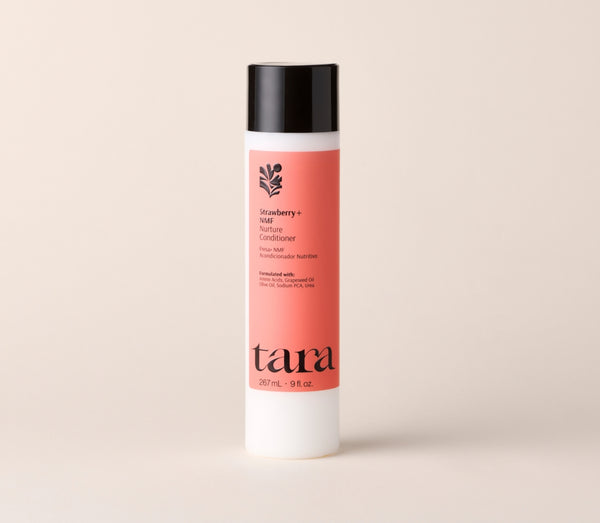
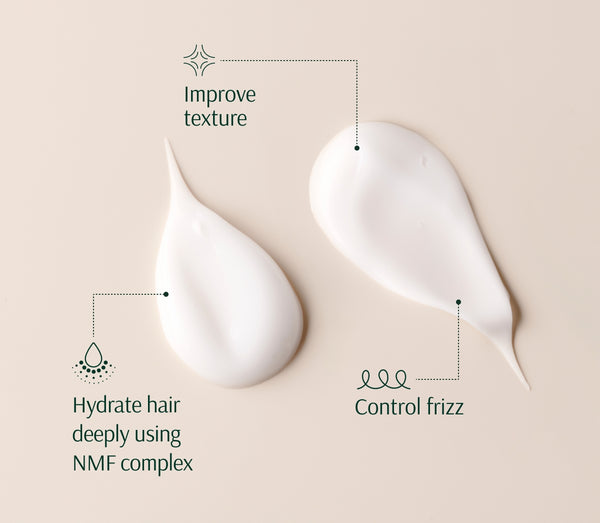
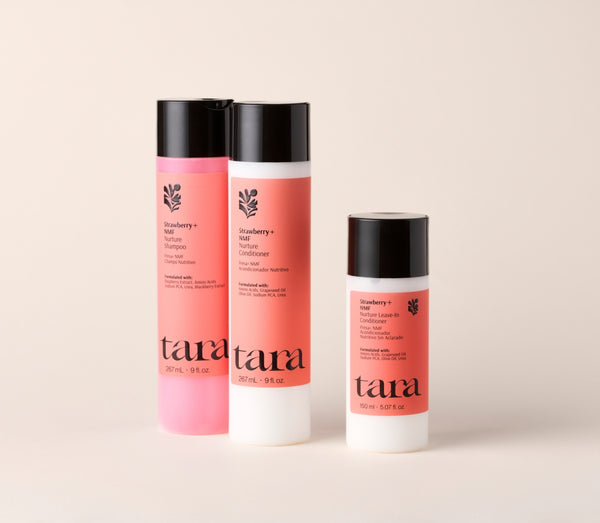
Hydrate first, then seal. The Strawberry NMF range is built on a natural-moisturising-factor base, not the berry — Sodium PCA, urea, humectant amino acids, lactic acid and allantoin, with ferment lysates and hydrolysed protein — rebuilding the moisture factors hair loses to washing. That gives the strand water to hold before any oil goes near it. The order beats the oil: humectants to draw and bind water, then, for shine or slip, the right oil on the surface.
Frequently asked questions
What is the best oil for dry hair, penetrating or coating?
It depends on the job. To cut protein loss from inside the strand, use a penetrating oil such as coconut — it entered the cortex and cut protein loss by about 39% (Rele & Mohile, J Cosmet Sci 2003). To smooth and add shine on the surface, use a coating oil such as argan as a finish. They are not interchangeable.
Does argan oil penetrate the hair shaft?
No. Argan is a bulky, linoleic-dominant, sunflower-type oil, and oils of that kind did not penetrate the cortex in testing (Rele & Mohile, J Cosmet Sci 2003). It deposits along the cuticle and adds shine; an in-vitro study found it cut protein loss as a surface coating, not internal repair (Sharifi, J Cosmet Dermatol 2022).
Can hair oil hydrate dry hair?
No. Oil is a lipid, not water. It slows water from leaving the strand but cannot add water that is not there, and a coating oil over dehydrated hair seals it in a dry state. Dry hair needs water plus humectants first; oil goes on afterward only to lock moisture in.
What is argan oil's strongest proof?
A skin trial, not a hair one: nightly argan oil improved skin elasticity over 60 days in 60 postmenopausal women (all p≤0.001; Boucetta, Clin Interv Aging 2015; a co-author is an argan-industry advocate, disclosed). Scalp is skin, so argan conditions it. It does not grow hair or repair the fibre from within.