Hydrolyzed keratin rebuilt shaft diameter on bleach-damaged hair within four wash cycles in a peer-reviewed test. That is more than a salon keratin treatment or a collagen supplement can claim. Hair is keratin, so loading up on keratin and collagen sounds like it should build stronger hair. It does not. A smoothing service, a swallowed protein, and a strand that is actually rebuilt are three different things. Here is what each one does, and what it does not.
What a salon keratin treatment actually does
Hair is mostly keratin, the structural protein that gives each strand its backbone. A salon keratin treatment does not rebuild that backbone. It is a smoothing service: the product is coated onto the hair and sealed with a flat iron at high heat, relaxing frizz and curl for a few weeks to a few months. It changes how the strand looks and behaves. It adds no protein to the follicle and does not make hair grow thicker.
One safety point is worth knowing. Many traditional formulas rely on formaldehyde or formaldehyde-releasing agents to lock the result in, and heating these releases fumes that regulators have flagged for respiratory and irritation risk. If you choose one, ask for a formaldehyde-free formula and a well-ventilated salon. It is a reasonable cosmetic choice for smoothness, provided you are clear about what it is: a seal on the surface, not a repair of the structure.
Does collagen for hair work?
Collagen is the protein of skin and connective tissue, not of the hair strand. Swallowing it does not turn it into hair. When you digest any protein, including collagen, the body breaks it into amino acids and sends them wherever it decides they are needed, not to your follicles. The evidence for oral collagen as a hair builder is thin, leaning on small studies often funded by supplement makers, or on collagen's better-documented effects on skin. Adequate dietary protein matters for hair. A collagen powder is not a proven way to build it.
What is measured to rebuild the fibre
If a surface seal and a supplement do not rebuild hair, what does? Putting back the materials the strand is made of, on hair that is already damaged. Two receipts.
The first is hydrolyzed keratin, the same protein as your hair, cut small enough to bind where the strand has lost it. In a peer-reviewed test, hydrolyzed keratin rebuilt shaft diameter on bleach-damaged hair within four wash cycles. Note the conditions: repair on hair already chemically damaged, measured over washes. It does not grow new or thicker hair from the follicle.
The second is ceramide. Ceramide NG belongs to the sphinganine-based ceramide family native to the human hair shaft, the lipid the cell membrane complex loses to bleach, heat and relaxers. Ceramides of this class bind to chemically damaged hair and reduce breakage (Bernard, Int J Cosmet Sci 2002). That study was manufacturer-affiliated (L'Oreal) and ex-vivo, run on hair fibres rather than people, so read it as a structural finding on damaged fibre, not a clinical growth result. A ceramide reinforces the strand instead of coating it the way a silicone does.
What it does not do
Black garlic does not build or grow hair. It is an antioxidant ferment with in-vitro chemistry only. No peer-reviewed trial shows it raises hair density or count, and Tara makes no follicle claim for it. Oral collagen is not a proven hair builder, for the reasons above. A salon keratin treatment is not the same as rebuilding the fibre: it smooths and seals the cuticle, a cosmetic result, not added structure. Even the keratin and ceramide receipts are bounded. Keratin rebuilt diameter on already-damaged hair over four washes, and the ceramide finding was ex-vivo and manufacturer-affiliated. Neither grows hair or restarts a follicle that has stopped producing. None of this replaces medical care for hair loss.
How Tara approaches it
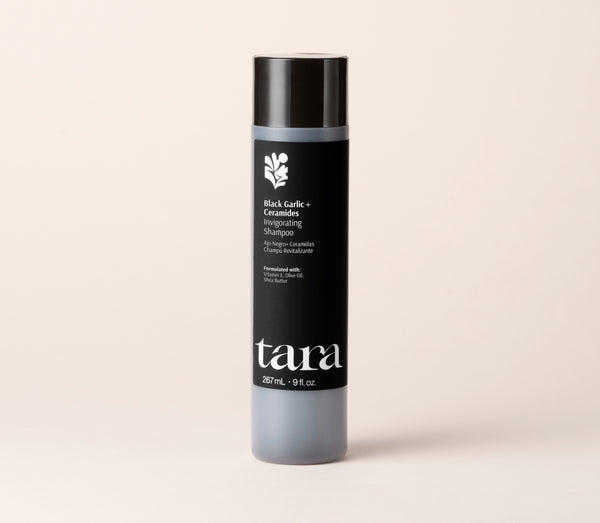
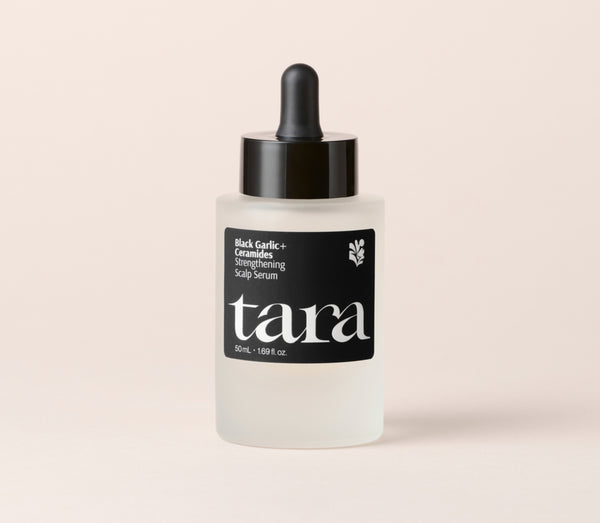
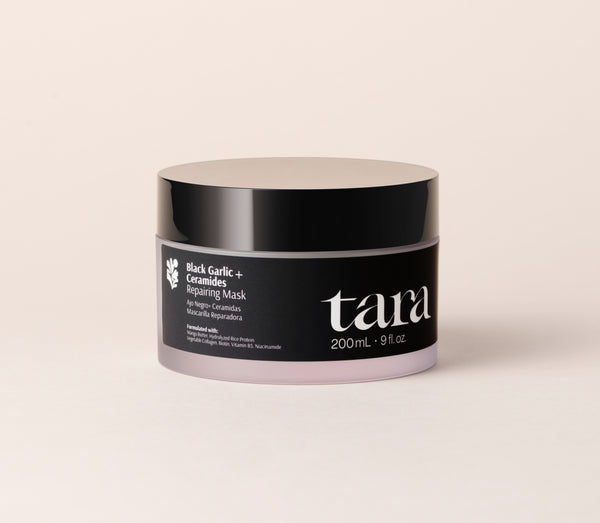
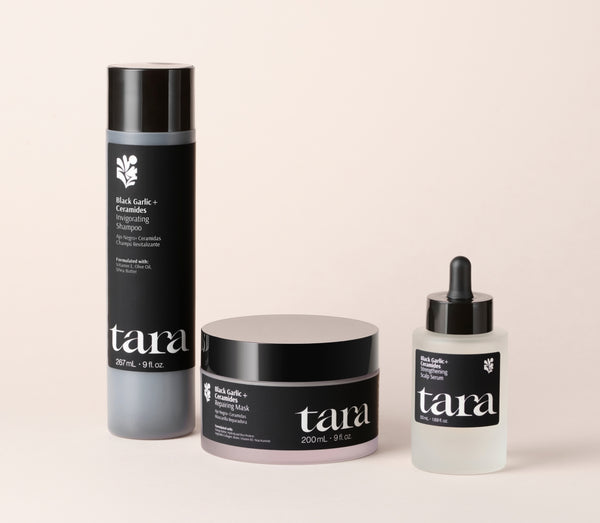
We do not promise to build hair. Our repair work reinforces the fibre you have with the materials it is made of. The black garlic and ceramide line pairs Ceramide NG, native to the hair shaft, with hydrolyzed keratin, and frames the black-garlic ferment honestly as an antioxidant signature, not a growth active. For hair that is rough or over-processed, that beats a one-off coating: put the protein and lipid back, cut the damage at the source with a gentle, sulfate-free wash from our scalp-friendly shampoos, and let healthy hair grow in behind it. If dryness rather than damage is the issue, our dry hair and hydration guide covers a moisture-first routine instead.
Frequently asked questions
Does a keratin treatment build or grow hair?
No. A salon keratin treatment is a smoothing service: product is coated on and sealed with heat to relax frizz for a few weeks to months. It seals the cuticle but adds no structure to the strand and does not make hair grow thicker. It is a cosmetic choice for smoothness, not a way to rebuild or grow hair.
Can hydrolyzed keratin actually repair damaged hair?
Within limits, yes. In a peer-reviewed test, hydrolyzed keratin rebuilt shaft diameter on bleach-damaged hair within four wash cycles. That is repair on hair already chemically damaged, measured over washes. It does not grow new hair from the follicle. It puts back the protein the strand has lost rather than coating the surface.
Does collagen for hair really work?
The evidence is thin. Collagen is a skin and connective-tissue protein, not a hair protein, and the body breaks any supplement into amino acids it uses where it chooses. Oral collagen is not a proven hair builder; it helps only if your diet is genuinely short on protein. For most people it is not the deciding factor for hair.
What about black garlic for hair growth?
Black garlic does not build or grow hair. It is an antioxidant ferment with in-vitro chemistry only, and no peer-reviewed trial shows it raises hair density or count. In Tara's ceramide line it carries an antioxidant signature; the work on damaged hair is done by the ceramide and hydrolyzed keratin, not the garlic.
How do ceramides help damaged hair?
Ceramide NG is in the sphinganine-based ceramide family native to the hair shaft, the lipid hair loses to bleach, heat and relaxers. Ceramides of this class bind to chemically damaged hair and reduce breakage (Bernard, Int J Cosmet Sci 2002), a finding that was ex-vivo and manufacturer-affiliated. They reinforce the strand's structure rather than coating it the way silicones do.