Dry and damaged get used as synonyms. They are not. Dry hair is short on water: a moisture problem. Damaged hair has a worn or broken cuticle, the strand's protective outer layer: a structural problem. Most hair is both, which is why a single treatment never holds. Here is how to tell them apart, and what the evidence says to do about each.
What dry hair is
Dry hair cannot hold enough water. The cuticle is often intact; the strand has simply lost the natural moisturising factors (NMF) that keep it soft and pliable. The causes are environmental, not destructive: dry air, air conditioning, hard water, over-washing, sun. Washing is the big one, stripping the water-binding factors the strand depends on. Dry hair feels rough, looks dull, and is thirsty root to tip, not only at the ends.
What damaged hair is
Damage is physical injury to the strand's structure. Heat, bleach, colour, relaxers, tension and friction lift, crack and erode the cuticle and strip the lipids that hold the fibre together. Once that outer layer goes, the strand bleeds protein and cannot keep moisture in even when you add it. You see it as split ends, breakage, strands that snap, colour that fades fast. It is worst at the oldest, most processed ends.
Dry vs damaged hair: the at-home test
Use the wet-stretch, or elasticity, test. Wet a single strand and pull it gently from both ends.
- It stretches a little, then springs back without breaking: healthy elasticity. Rough but recovers normally means dryness, not damage.
- It stretches like wet gum and stays limp, or snaps almost at once: the structure is gone. That is damage.
Run your fingers down the strand too. Smooth means an intact cuticle; rough, catchy patches mean a worn one. Expect a mix: healthier at the root, more damaged at the ends.
How to treat dry hair: rebuild the moisture base
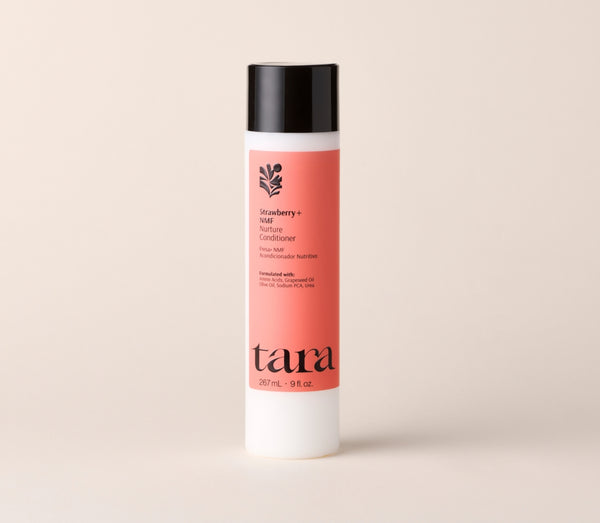
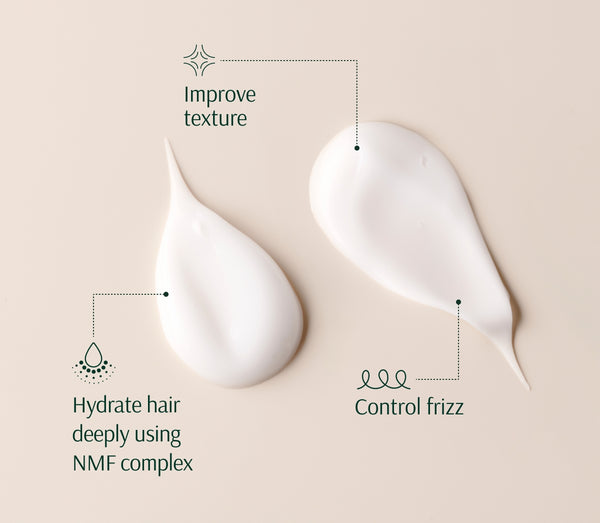
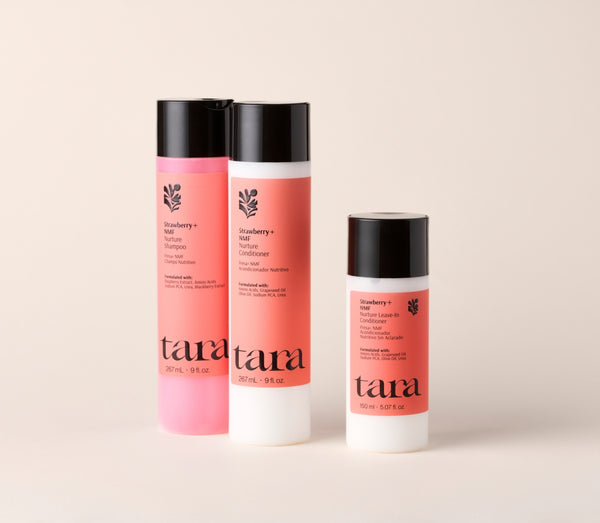
Dry hair is a moisture problem, so the fix is water and the ingredients that pull it in and hold it, not more protein. That means humectants and the components of the hair's own NMF, the moisture factors washing strips out: sodium PCA, urea, humectant amino acids, lactic acid, panthenol and hydrolysed protein, which draw water in and keep it there. Wash less, with a gentle sulfate-free formula. Tara's strawberry and NMF line is built on exactly this base, rebuilding the moisture factors hair loses to washing; our dry hair and hydration guide lays out a moisture-first routine.
How to treat damaged hair: reinforce the cuticle
Damage is structural, so hydration alone will not hold. You reinforce the cuticle so it can protect the strand again. The strongest evidence is for ceramides, the lipids that are part of the hair's own structure. A sphinganine-based ceramide bound to chemically damaged hair and reduced brush-stroke breakage versus untreated controls in ex-vivo testing (Bernard, Int J Cosmet Sci 2002, a manufacturer-affiliated study). Ceramide NG is from that same family native to the hair shaft, which is why it binds where the fibre is worn instead of just sitting on top. Then stop the source: drop the heat, space out bleach and colour, cut friction. Tara's black garlic and ceramide range leads on this ceramide step, reinforcing the cuticle so the strand resists everyday wear.
When you have both
Most hair does. Alternate instead of piling everything on at once: lead with the ceramide repair step where the hair is broken, usually the ends, and the moisture base everywhere it simply feels dry. Do not stack heavy protein on a moisture-starved strand; it leaves it stiff. Read your hair and treat what it shows.
How strawberry, NMF and oils fit
Strawberry is the hero botanical in Tara's moisture line. It brings antioxidant support and the sensory identity of the Strawberry NMF system, while the NMF base rebuilds the water-binding factors hair loses to washing. Together, they make the routine feel and perform like a moisture system: strawberry as the signature hero, NMF as the hydration engine. Argan oil then seals and adds shine, so use it as the finishing layer over hydration rather than as the whole moisture step.
Frequently asked questions
What is the difference between dry and damaged hair?
Dry hair is a moisture problem: the cuticle can be intact, but the strand is short on the water-binding factors it loses to washing, so the fix is humectants and an NMF base. Damaged hair is a structural problem: the cuticle is worn from heat, colour or friction, so it needs the cuticle reinforced. Dryness shows all over; damage is worst at the older ends.
How can I tell if my hair is dry or damaged at home?
Do the wet-stretch test: wet a single strand and pull it gently from both ends. If it stretches a little and springs back, your hair is healthy and any roughness is dryness. If it stretches like wet gum and stays limp, or snaps almost at once, the structure is damaged.
Can hair be both dry and damaged at the same time?
Yes, and most hair is. New growth near the scalp is usually healthier, while the older lengths and ends are both drier and more damaged. Treat each where it appears: the moisture base where hair feels dry, the ceramide repair step where it is broken, not one product everywhere.
Does oil fix dry or damaged hair?
No. Oil is a lipid, not water, so it slows moisture loss but cannot hydrate a strand that is short on water. And argan oil coats the cuticle rather than entering the cortex (Rele & Mohile, J Cosmet Sci 2003), so it does not rebuild damaged fibre. Use water and humectants for dryness, and reinforce the cuticle for damage; oil is the seal, not the source.
What repairs damaged hair?
Reinforcing the worn cuticle, plus stopping the cause. The clearest evidence is for ceramides: a sphinganine-based ceramide bound to chemically damaged hair and reduced brush-stroke breakage versus untreated controls in ex-vivo testing (Bernard, Int J Cosmet Sci 2002, manufacturer-affiliated). Pair that with lower heat and less bleach, colour and friction. Repair manages existing damage; it cannot reverse it, so prevention does most of the work.