Over six months, topical rosemary oil matched 2% minoxidil on hair count in a randomised trial of 100 men with androgenetic alopecia, with significantly less scalp itching (Panahi, Skinmed 2015). That is rare. Most botanicals sold for hair have never been measured against a drug. The result is genuine, and narrower than the headlines claim. Reading it honestly is the whole point.
What the trial actually measured
The study enrolled 100 men with pattern (androgenetic) hair loss and split them between topical rosemary oil and minoxidil at 2% — the lower over-the-counter strength, not the maximal 5%. Over six months, both arms significantly increased hair count from baseline, with no statistically significant difference between them: rosemary kept pace with the drug. They diverged on tolerability. Itching was significantly less frequent in the rosemary arm at three and six months (Panahi, Skinmed 2015).
Two design facts keep this honest. It was single-blind, not the stronger double-blind standard, and it ran in men with one hormone-driven kind of shedding. "Matched minoxidil" is true — at 2%, in that group, over that timeline. It is not a universal regrowth result, and was never built to be one.
How rosemary works
Pattern hair loss is driven by DHT, a hormone that shrinks sensitive follicles. The mechanism that fits rosemary is interference with that pathway: rosemary leaf extract inhibited the enzyme 5-alpha-reductase by 82% to 95%, through a compound called 12-methoxycarnosic acid, and promoted regrowth in a testosterone-induced alopecia model (Murata, Phytother Res 2013). 5-alpha-reductase is the enzyme that makes DHT, so blunting it is a direct route to slowing miniaturisation — which is why rosemary helped in a DHT-driven condition specifically.
One fact belongs here, not in the small print. That mechanism was shown in the test tube and in a mouse, not read out directly in people. It explains the human trial rather than replacing it. The measured route is enzyme inhibition. That is the claim, and the only one the data support.
How to use rosemary oil
Essential oils are concentrated, so the rules are dilution and patience.
- Dilute it. Mix a few drops of rosemary essential oil into a carrier such as jojoba before it touches the scalp. Undiluted, it irritates.
- Patch test first. Apply a little to the inner arm and wait 24 hours.
- Massage into the scalp, two to three times a week. Use fingertips, leave on at least ten minutes or overnight, then wash out.
- Judge it over months. The trial measured six months. Expect maintenance and modest regain over that horizon, not a change in weeks.
Where a formulated serum fits
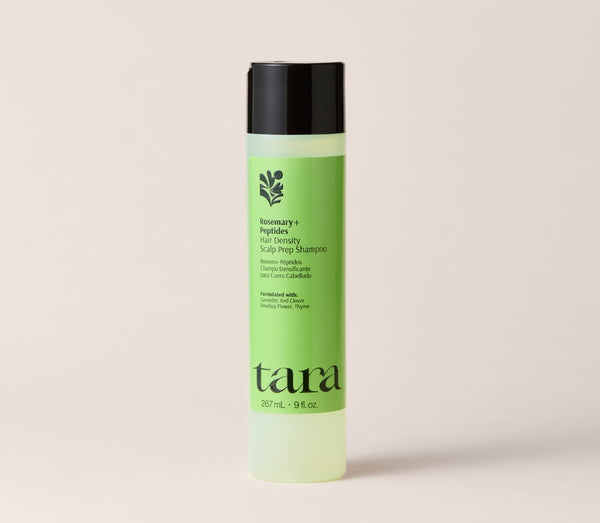
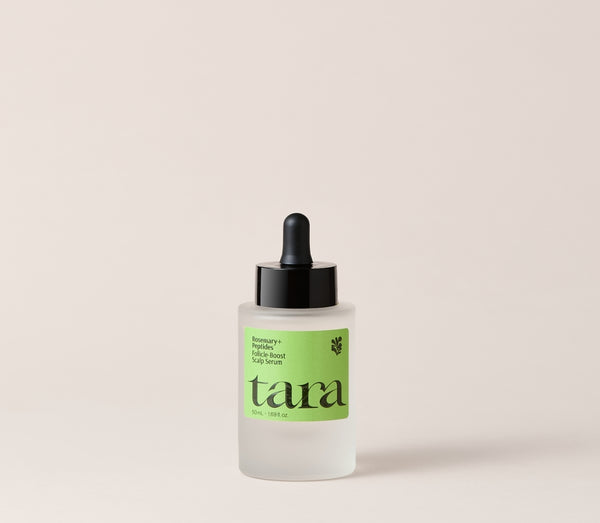
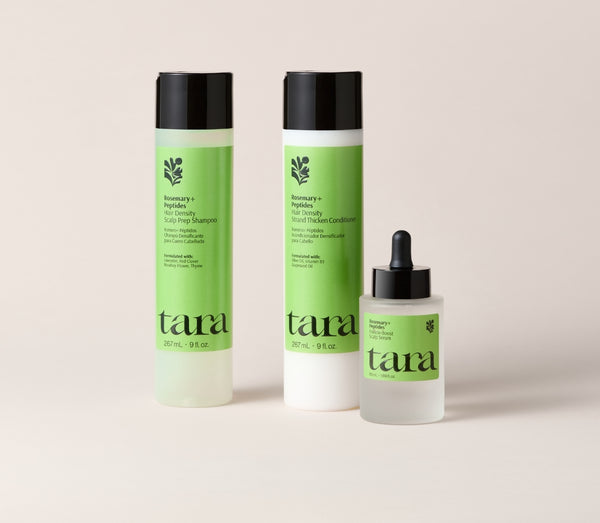
Pure oil leans on one ingredient and feels heavy. A formulated serum is a different approach: Tara's rosemary and peptide scalp serum pairs rosemary with a peptide stack — Procapil and Redensyl — dosed at the supplier's clinical level in a lightweight base. Those peptides carry manufacturer-funded in-vivo data, which we disclose rather than present as independent proof. The independent receipt here is the rosemary trial itself. You can explore the rosemary and peptides range, or read the wider hair growth and density guide.
Whatever you choose, a healthy scalp and consistency matter more than any single bottle. Sudden, patchy, or worsening shedding is not pattern loss and needs a doctor's review. First understand what is driving your hair loss.
What it does not do
Rosemary oil is not a cure, and is not sold as one. The Panahi trial ran in men with androgenetic alopecia, so it does not establish regrowth in non-androgenetic shedding — the diffuse loss after illness, stress, or childbirth is a different process it never tested (Panahi, Skinmed 2015). The 5-alpha-reductase mechanism is real but was shown in-vitro and in a mouse, not as a human readout (Murata, Phytother Res 2013). The comparator was 2% minoxidil, not the stronger 5%. What the evidence supports is maintenance and modest regain over months, in pattern hair loss, from a treatment easier on the scalp than the drug. No more, and no less.
Frequently asked questions
Does rosemary oil really regrow hair?
In one specific setting, yes. In a six-month trial of 100 men with androgenetic (pattern) hair loss, topical rosemary oil matched 2% minoxidil on hair count, with less scalp itching (Panahi, Skinmed 2015). It was single-blind and limited to pattern shedding, so it is a real but narrow result, gradual over months rather than weeks.
How does rosemary oil work on hair?
The mechanism is hormonal. Rosemary leaf extract inhibited 5-alpha-reductase — the enzyme that makes the follicle-shrinking hormone DHT — by 82% to 95% via 12-methoxycarnosic acid, and promoted regrowth in a mouse model (Murata, Phytother Res 2013). That work was in-vitro and in animals, so it explains the human trial rather than standing in for it.
How long does rosemary oil take to work?
Months, not weeks. The main trial ran six months before the result was clear, and hair grows slowly (Panahi, Skinmed 2015). The routine is gentle scalp massage with diluted oil two to three times a week. If there is no change after several months, reassess.
Does rosemary oil help all types of hair loss?
No. The evidence is specific to androgenetic alopecia, the hereditary, DHT-driven thinning the trial enrolled (Panahi, Skinmed 2015). It does not establish anything for sudden, patchy, or postpartum shedding, which work through different mechanisms. Loss that does not look like gradual pattern thinning needs a doctor before you rely on an oil.
Related: rosemary is one of twelve ingredients graded in Tara’s hair-ingredient evidence table — what works, what does not, and the study behind each.