Ghassoul is a lacustrine stevensite smectite clay. Its surface carries a net-positive charge at wash pH, and that charge adsorbs the sebum it meets (Moussout et al., Heliyon 2020). That is the whole mechanism behind a clay-based shampoo for oily scalp: the clay binds surface oil during the wash and rinses away with it. No more, no less. Below is how an oily scalp behaves, what a clarifying wash does and does not do, and exactly where ghassoul, salicylic acid and charcoal fit.
Over-stripping makes an oily scalp worse
The scalp produces sebum to protect skin and hair. Strip it bare with a harsh, high-foaming wash and the scalp reads the shortage as a signal to make more, so the grease comes back faster. That is the loop behind oily roots a day after washing: the harder you degrease, the harder the scalp pushes back. The strongest, most stripping formula is not the best shampoo for oily hair. The job is to manage oil gently and leave the barrier intact, not to scrub the scalp raw.
How ghassoul clay adsorbs surface sebum
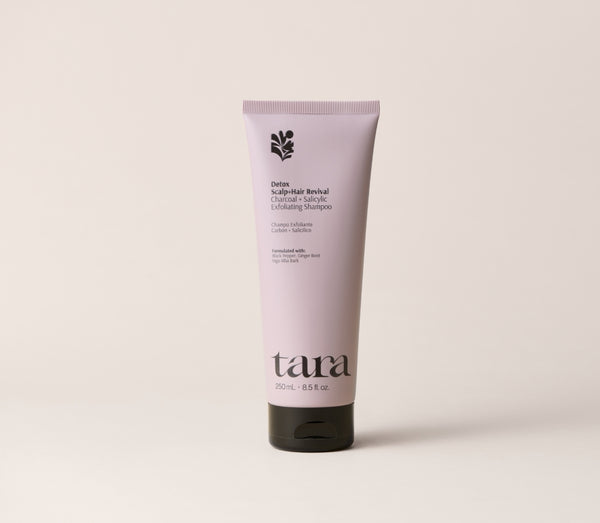
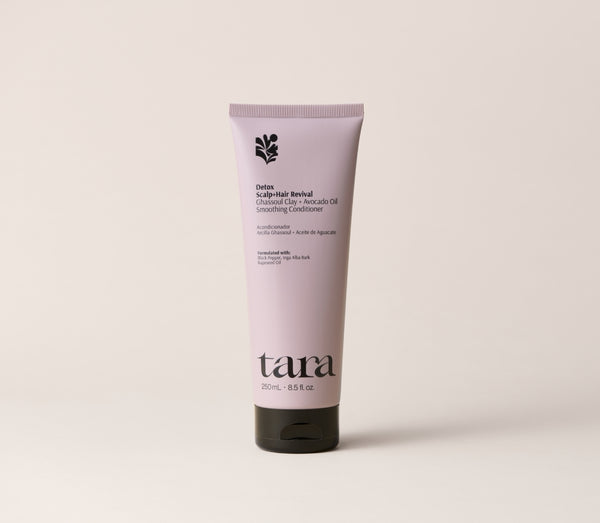
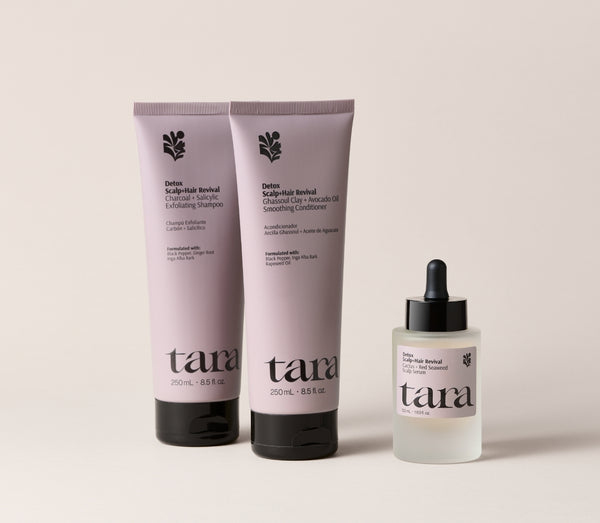
Ghassoul, also written rhassoul, is a Moroccan clay from the hammam tradition. Its action on an oily scalp is physical and surface-level. It is more than 90 percent stevensite, a smectite clay with a high surface area (133 to 147 m2/g), and its particles hold a net-positive charge at wash pH. That charge adsorbs the sebum fraction, so excess oil and build-up bind to the clay and lift away on rinsing (Moussout et al., Heliyon 2020). Smectite is an established adsorbent of sebum components, which is why a clay wash leaves an oily scalp clean and balanced instead of tight. TARA builds its detox shampoo around ghassoul, and the scalp detox guide shows how a reset wash fits a weekly routine.
What salicylic acid adds at a clarifying dose
Salicylic acid is the lipophilic beta-hydroxy acid that dissolves into sebum-rich follicles and loosens the bonds holding dead skin and oil together. In TARA's detox shampoo it ships at 0.4 percent, and at that dose its job is precise: it lifts the oil-and-keratin build-up that traps the follicle, leaving a flake-prone, oily scalp clear at the root. This is a clarifying mechanism, not a medicated one, and the dose draws that line. Charcoal sits alongside as a surface oil-binder, and a TRPM8 cooling agent eases the itch that comes with a congested scalp.
What to look for in a shampoo for oily scalp
- An oil-adsorbing active, not just detergent. A clay such as ghassoul binds surface sebum and rinses it away, working with the scalp instead of blasting it off.
- A gentle, sulfate-free base. Harsh sulfates over-strip and provoke the rebound; a sulfate-free cleanser clears build-up without it.
- A light exfoliating step for build-up. A clarifying-dose salicylic acid loosens the dead skin and oil that collect at the roots, with no daily scrubbing.
- Nothing that coats the roots. Silicones and heavy conditioners sit on an oily scalp and turn it greasy sooner; condition mid-lengths and ends only.
How often should you wash an oily scalp?
There is no single correct number, but the popular advice to train the scalp by washing far less does not help a genuinely oily one; it leaves build-up sitting on the skin. Wash when the scalp feels oily, often every one to two days, with a gentle sulfate-free shampoo, and add a clay-based clarifying wash once or twice a week to reset build-up. Clarifying is a cadence, not a daily habit. Between washes, avoid over-brushing the roots, which drags oil down the hair. You can browse the full shampoo range to match a formula to your scalp, and give any new routine a few weeks, since oil production settles gradually.
What it does not do
Two claims are wrong and worth retiring. Ghassoul is not volcanic and it does not remineralize the scalp. It is a lacustrine sedimentary stevensite clay (Chahi et al., J Sediment Res 1999), and its action is surface sebum adsorption by a smectite, not transdermal delivery of minerals; no mineral crosses the barrier. And at 0.4 percent, the salicylic acid in this wash is not an anti-dandruff treatment and does not control dandruff. The US FDA's recognised threshold for that claim is 1.8 percent (Monograph M032, 2021); a clarifying dose sits well below it. It lifts build-up, which is the verb the evidence supports.
Charcoal does not detox the follicle — it binds surface oil and rinses away. It draws no toxins out of the scalp. An independent dermatology review found no clinical evidence for charcoal's cosmetic claims (Sanchez et al., Clin Dermatol 2020), and cosmetic charcoal particles are one to two orders of magnitude too large to enter the follicle (Patzelt et al., J Control Release 2011). Charcoal is the sensory signal of a deep cleanse, not an active that reaches the follicle.
Frequently asked questions
What is the best shampoo for oily scalp?
One that adsorbs and clarifies excess oil without over-stripping. Look for a gentle, sulfate-free base with an oil-binding clay such as ghassoul, plus a clarifying-dose salicylic acid to lift build-up. The strongest, most stripping formula is the wrong choice, because it triggers rebound oil. Condition the lengths only, never the oily scalp.
How does ghassoul (rhassoul) clay help an oily scalp?
Ghassoul is a stevensite smectite clay whose surface carries a net-positive charge at wash pH, which adsorbs the sebum it meets (Moussout et al., Heliyon 2020). Excess oil and build-up bind to the clay and rinse away, leaving the scalp clean and balanced rather than chemically stripped. It works on the surface during the wash; it is not absorbed into the scalp.
Does ghassoul remineralize the scalp?
No. Ghassoul is a lacustrine sedimentary stevensite clay (Chahi et al., J Sediment Res 1999), not volcanic, and its only action is surface sebum adsorption by a smectite. There is no transdermal mineral delivery; the clay does not carry minerals into the skin. The honest claim is oil adsorption at the surface, nothing more.
Does a salicylic acid shampoo for oily scalp treat dandruff?
Not at this dose. The US FDA recognises salicylic acid for dandruff control at 1.8 to 3 percent (Monograph M032, 2021). TARA's detox shampoo ships it at 0.4 percent, below that threshold, so it is a clarifier, not an anti-dandruff treatment: at that dose it lifts and exfoliates the build-up that traps the follicle. For persistent dandruff, use a medicated antifungal shampoo or see a dermatologist.
Why is my scalp oily again so quickly after washing?
Because the wash is too harsh. Stripping all the oil away prompts the scalp to overproduce sebum to compensate, so grease returns fast. Switch to a gentle, sulfate-free shampoo and clarify with a clay wash once or twice a week; this settles over a few weeks. Deliberately washing very rarely does not fix oiliness, since build-up simply sits on the scalp.