Vitamins grow hair only when they correct a real deficiency. When your levels are normal, more does nothing. Biotin, iron, vitamin D and zinc each drive shedding when you are short of them, and topping them up settles that shedding over the following months. Past your baseline, extra nutrients add no growth. So if you are losing hair, the question is not which vitamin to take. It is whether you have a gap worth correcting.
Which deficiencies actually cause shedding
A handful of nutritional gaps drive shedding, usually a diffuse thinning across the whole scalp rather than patchy loss. The strongest evidence sits with iron, vitamin D, zinc and dietary protein. Biotin (vitamin ??) deficiency causes hair loss too, but true deficiency is rare on a varied diet.
- Iron (ferritin): low iron stores are one of the most common and reversible drivers of diffuse shedding, especially in menstruating people.
- Vitamin D: low levels track with several types of hair loss and are widespread in sun-cautious populations.
- Zinc: a genuine deficiency triggers shedding; dosing beyond your needs adds nothing.
- Thyroid: not a nutrient, but an under- or over-active thyroid is a frequent, treatable cause of hair changes, which is why it belongs on the test list.
What is worth testing before you buy supplements
Because the benefit depends entirely on whether you are deficient, a short list of blood tests tells you more than any product label. Test ferritin (iron stores), vitamin D, thyroid function (TSH), and, if your diet is limited, zinc and a full blood count. Testing also stops the opposite mistake: dosing high on something you do not need.
Why biotin for hair is oversold
Here is the part the marketing skips. If you are not deficient, extra biotin does not grow more or thicker hair. Most people get plenty from eggs, nuts, seeds and whole grains, and the body clears the surplus. Biotin works if you are genuinely low. If you are not, it is inert.
It also carries a real hazard. High-dose biotin interferes with common laboratory immunoassays, throwing falsely high or low results on tests that include thyroid panels and the troponin assays used to read the heart. That wrecks the very bloodwork meant to find the cause of your shedding, and for cardiac markers the stakes go well beyond hair. If you take biotin, stop it several days before bloodwork.
The role of a balanced multivitamin
A balanced multivitamin earns its place as nutritional insurance when your diet is inconsistent, and the wider hunt for vitamins for hair growth makes sense only framed that way: covering the basics, not chasing one hero nutrient. It does not treat genetic hair loss, and more is not better, since fat-soluble vitamins and minerals such as selenium turn harmful in excess.
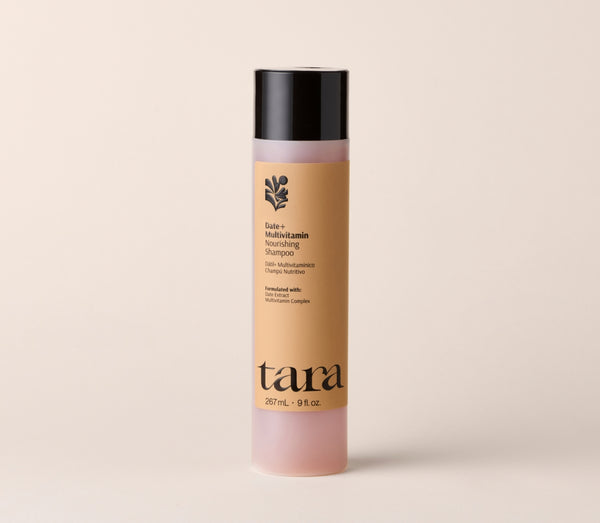
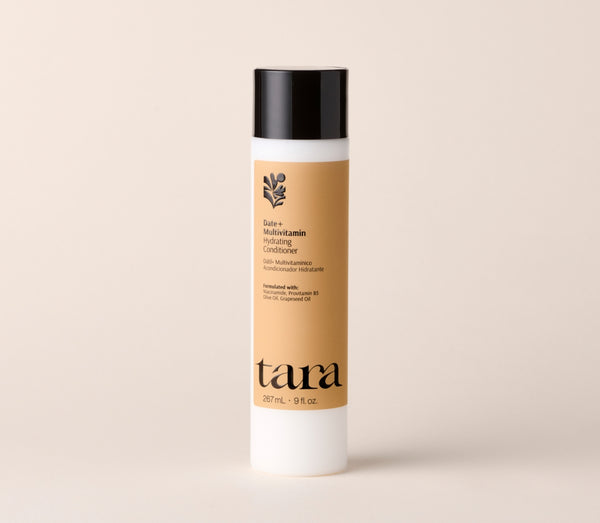
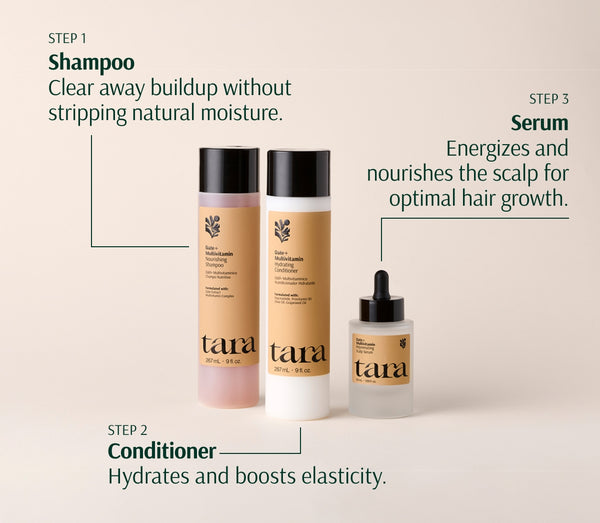
This is where Tara stays deliberately narrow about its own multivitamin. The Date Multivitamin line carries an encapsulated A, C and E complex (Vegan DDS) at 0.2%, present as antioxidant support during the wash. The date extract's own receipt is a skin one: an 8% Ajwa date lotion significantly raised skin hydration and lowered water loss over four weeks in a controlled trial (Lestari, Turkish J Dermatol 2024). Scalp is skin, but that is hydration on a keratinised surface, not a breakage or growth claim.
What it does not do
Three hard limits. First, supplements do not grow extra hair in a person who is not deficient; they correct shortfalls, and past that they do harm in excess. Second, no vitamin reverses pattern (genetic) hair loss, on the scalp or in a bottle. Third, a wash-off cannot drive vitamins into the follicle: follicular delivery needs particles in roughly the 300 to 700 nanometre range plus mechanical action and a formula that stays on the scalp (Patzelt & Lademann, J Control Release 2011), and a rinse-out has none of those. So Tara makes no follicular-delivery or breakage-reduction claim for its multivitamin. The encapsulated A, C and E are antioxidant support during the wash, and the date extract's measured benefit is skin hydration.
Fix the inside, then support the scalp
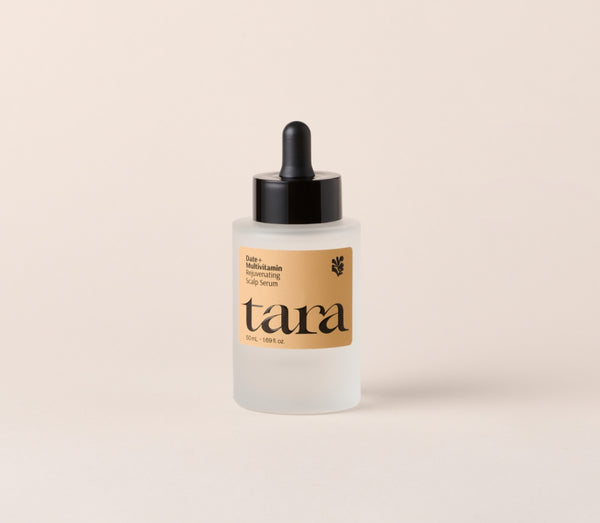
Correcting a deficiency fixes one cause of shedding from the inside. The scalp is the other half, since hair grows from follicles that respond to direct topical care, not a wash-off that promises to feed them. Tara works on the scalp itself: lightweight scalp serums with peptide-class actives, including an onion and Capixyl line whose density work rests on an independent trial in which a biochanin-A and acetyl-tetrapeptide-3 tonic matched 3% minoxidil for terminal hair count over 24 weeks (Lueangarun & Panchaprateep, J Clin Aesthet Dermatol 2020). For a structured start, the hair loss guide and the growth and density hub show how internal and topical care fit together. Get tested first, and see a doctor for shedding that is sudden, patchy or severe.
Frequently asked questions
Does biotin for hair really work?
Only if you are genuinely biotin-deficient, which is rare on a varied diet. With normal levels, extra biotin does not grow more hair, so confirm a deficiency before spending on high-dose gummies. Biotin from eggs, nuts, seeds and whole grains covers what the body needs.
What vitamins for hair growth are actually worth taking?
The ones you are short of, most often iron, vitamin D and zinc. A balanced multivitamin covers dietary gaps as nutritional insurance, but mega-dosing single nutrients past your needs adds nothing and can do harm, since fat-soluble vitamins and minerals like selenium accumulate. Correct confirmed deficiencies; do not chase a hero nutrient.
What should I get tested if my hair is shedding?
Test ferritin (iron stores), vitamin D and thyroid function (TSH), plus zinc and a full blood count if your diet is limited. These pinpoint correctable causes far better than guessing with hair loss vitamins, and they spare you supplements you do not need.
Can biotin affect my blood test results?
Yes. High-dose biotin interferes with common immunoassays and skews results, including thyroid panels and the troponin tests used to read the heart. It misleads the very bloodwork meant to find the cause of your shedding, and for cardiac markers it carries clinical consequences. Stop it several days before testing.
Will a vitamin or multivitamin regrow genetic hair loss?
No. Vitamins correct deficiencies; they do not reverse pattern (genetic) hair loss. And a wash-off cannot drive vitamins into the follicle, which needs roughly 300 to 700 nanometre particles plus mechanical action and a leave-on base (Patzelt & Lademann, J Control Release 2011). Tara's encapsulated A, C and E are antioxidant support during the wash, not a follicular-delivery or regrowth claim.
Related: see where biotin lands among every hair ingredient in Tara’s evidence table.