A split end cannot be permanently repaired. Hair is not living tissue, so a strand that has split does not re-fuse. A product seals the frayed end temporarily; a trim removes it; and prevention is the treatment. Every product promising to mend, repair or glue split ends back together is selling the temporary seal as a cure. Ceramide NG binds to chemically damaged hair and reduces breakage (Bernard, Int J Cosmet Sci 2002, ex-vivo, L'Oreal-affiliated). Hydrolyzed keratin rebuilds shaft diameter on bleach-damaged hair. Those are the two reinforcing actives that earn their place. Nothing fuses a split end back together.
What causes split ends and breakage
Split ends form when the cuticle, the protective outer layer of the hair, wears away and exposes the weaker inner fibre, which frays and divides. Breakage is the same process one step earlier: a weakened strand snapping along its length. The causes are cumulative.
- Heat styling. Repeated high heat from hot tools cracks the cuticle and drives moisture out of the strand.
- Friction and rough handling. Aggressive brushing, towel-scrubbing, tight ponytails and cotton pillowcases abrade the ends over time.
- Over-processing. Bleach, permanent colour and chemical straightening break protein bonds and strip cuticle lipids, leaving hair porous and fragile.
- A protein and moisture imbalance. Too little protein leaves strands over-stretchy; too little moisture leaves them brittle. Either tilt ends into breakage.
How to fix split ends: treatment versus prevention
No leave-in or mask fuses a split strand back into one. A good product binds the frayed end and smooths the cuticle, so splits are less visible until the next trim, while reinforcing actives cut how much the strand breaks in the first place. So the answer to how to fix split ends is two things together: regular trims to remove ends that have already split, and a gentle routine that stops new ones forming. Prevention is not the consolation prize. It is the treatment.
The receipts: what reinforces a damaged strand
Two ingredients carry the strength story, and each has been measured rather than assumed. Ceramide NG belongs to the sphinganine-based ceramide family native to the human hair shaft, the lipid the cell membrane complex loses to bleach, heat and relaxers. Ceramide NG binds to chemically damaged hair and reduces breakage (Bernard, Int J Cosmet Sci 2002). The study is ex-vivo, on hair fibres rather than people, and manufacturer-affiliated (L'Oreal): a structural result on damaged fibre, not a clinical repair claim. The ceramide reinforces the strand from within rather than coating it the way a silicone does and washing away.
The second is hydrolyzed keratin, the same protein as your hair, cut small enough to bind where the strand has lost it. Hydrolyzed keratin rebuilt shaft diameter on bleach-damaged hair within four wash cycles (Roddick-Lanzilotta, Int J Cosmet Sci 2014): repair on hair already damaged, measured over washes. Neither active fuses a split or grows hair. Both reduce breakage and reinforce the fibre you already have.
How to prevent and reduce hair breakage
A hair breakage treatment is mostly a set of habits that lower the daily stress on each strand.
- Turn the heat down and protect it. Use the lowest workable temperature and a heat protectant before any hot tool.
- Handle hair gently. Detangle from the ends up with a wide-tooth comb, pat rather than rub when drying, and swap tight elastics and cotton for soft ties and a satin pillowcase.
- Balance protein and moisture. Alternate strengthening and hydrating steps rather than overloading either; our dry hair and hydration guide explains how to read which your hair needs.
- Reinforce the cuticle, do not just coat it. Ceramides are part of the hair's own structure, so replacing the lipid that processing strips helps the cuticle hold together.
How Tara approaches strength
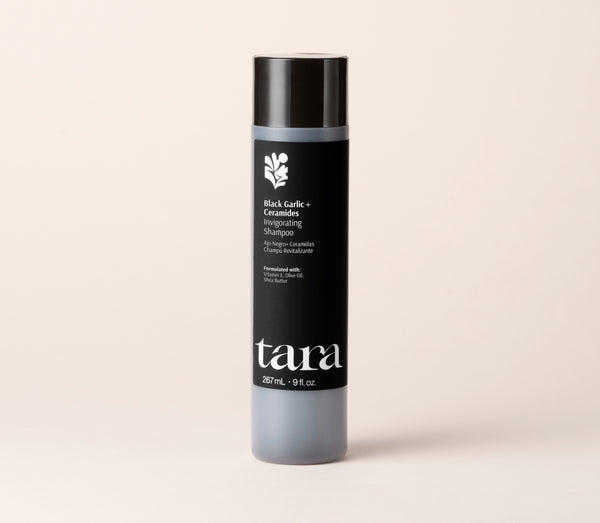
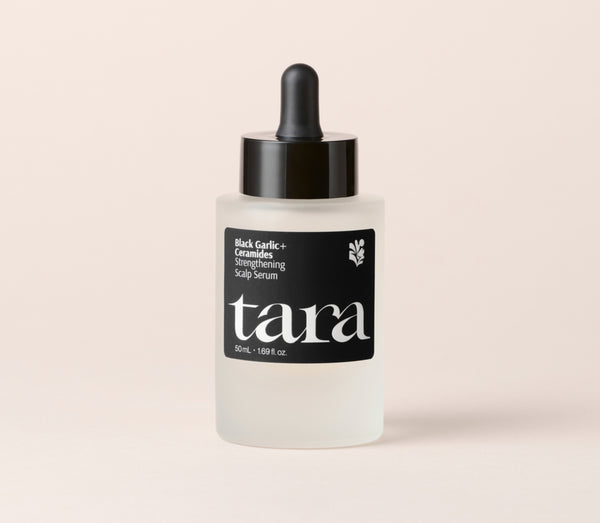
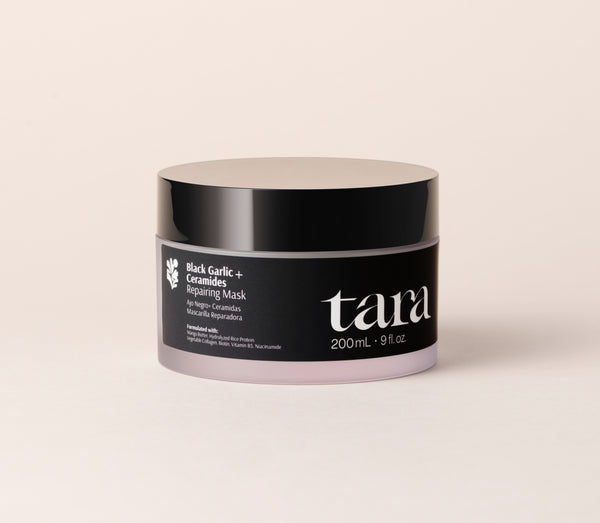
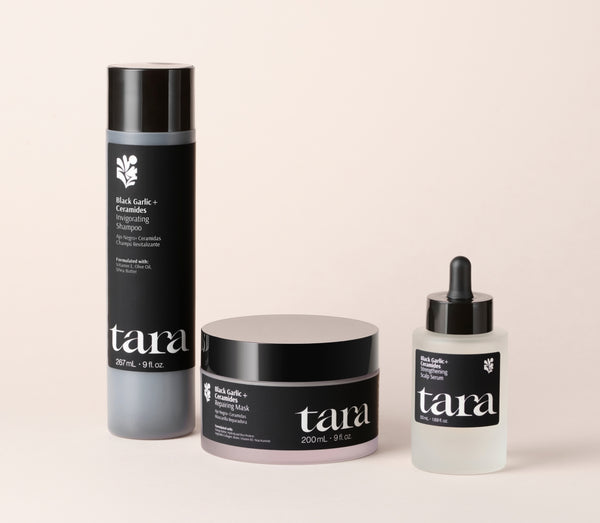
Our strength line reinforces the strand. It does not promise permanent repair, because there is no such thing. The black garlic and ceramide range pairs Ceramide NG, native to the hair shaft, with hydrolyzed keratin, so the reinforcing work is done by actives measured on damaged fibre. The ceramide and keratin are the strengthening receipts. Black garlic is an antioxidant ferment, not a protein, a growth active or part of the breakage story. The result is the one we can defend: less breakage and a reinforced strand, alongside the trims and gentle handling that do the rest.
What it does not do
Nothing in this category permanently fuses a split end. A split strand is not living tissue and cannot be rejoined; the only way to remove a split for good is to trim it. Ceramide NG and hydrolyzed keratin reduce breakage and reinforce the fibre, but they do not repair a split and they do not grow hair: the receipts measure breakage, shaft diameter and binding to damaged fibre, not hair count or anything at the follicle. The ceramide finding was ex-vivo and manufacturer-affiliated, and the keratin result was repair on already-damaged hair over four washes: structural effects on the strand, not clinical cures. Black garlic plays no role here. It is an antioxidant ferment with in-vitro chemistry only, and no peer-reviewed evidence shows it reduces breakage, repairs splits, grows hair or protects the follicle.
Frequently asked questions
Can split ends be repaired permanently?
No. A hair strand is not living tissue, so once it splits it cannot be permanently rejoined. A product seals and smooths the frayed end so it looks and feels better, but the only way to remove a split for good is to trim it. Prevention is the real treatment.
What actually reduces hair breakage?
On a damaged strand, ceramides and protein have been measured. Ceramide NG binds to chemically damaged hair and reduces breakage in an ex-vivo, L'Oreal-affiliated test (Bernard, Int J Cosmet Sci 2002), and hydrolyzed keratin rebuilt shaft diameter on bleach-damaged hair within four wash cycles (Roddick-Lanzilotta, Int J Cosmet Sci 2014). Both reinforce the fibre; neither fuses a split or grows hair. Gentler handling, less heat and a balanced routine do the rest.
How often should I trim to manage split ends?
Most people do well trimming every eight to twelve weeks, though it depends on how fast your hair grows and how much heat or chemical processing it gets. If you see splits travelling up the strand, trim sooner: a split left alone keeps climbing and causes more breakage.
Do ceramide or keratin treatments fix split ends?
No. Ceramides reinforce the cuticle and reduce breakage, and hydrolyzed keratin rebuilds shaft diameter on damaged hair, but neither re-fuses an end that has already split in two. They make the strand stronger and splits less likely going forward; you still need a trim to remove existing splits.
Does black garlic help split ends or breakage?
No. Black garlic is an antioxidant ferment with in-vitro chemistry only, and no peer-reviewed evidence shows it reduces breakage, repairs splits or affects hair growth. In Tara's ceramide range it carries an antioxidant signature; the work on damaged hair is done by the ceramide and hydrolyzed keratin, not the garlic.