Postpartum hair loss is acute telogen effluvium. The estrogen drop after birth pushes a wave of hairs out of the growing phase at once, and they shed together a few months later. The follicles are not damaged. The shed is temporary. It resolves on its own. Finding handfuls of hair on your brush, pillow and shower drain a few months after a baby is alarming, but it arrives on a predictable schedule and clears without treatment.
Why postpartum hair loss happens
Hair grows in cycles. At any moment most of your hairs are in a long growing phase (anagen), while a smaller share rest (telogen) before they shed and are replaced. During pregnancy, high estrogen holds hairs in the growing phase, so fewer than usual move into shedding. That is why hair looks unusually thick in late pregnancy: you are keeping hairs you would normally have shed.
After birth, estrogen drops sharply to baseline. The hairs it was holding shift into resting at roughly the same time, and a few months later they shed together. The clinical name is acute telogen effluvium. This is the synchronised release of hair you were already due to lose, not damage to the follicles, which is why it recovers fully.
The timeline for hair loss after pregnancy
The shedding does not start at birth, which catches most people off guard. The pattern is consistent:
- It starts around two to four months after birth, not immediately.
- It peaks around the third or fourth month, when the daily shed looks dramatic.
- It is diffuse, and most noticeable around the hairline and temples.
- It resolves on its own by around six to twelve months postpartum as the cycle resynchronises.
Most parents notice fine, short regrowth fringing the hairline as a new growing phase begins. That regrowth is the recovery showing up, even if it looks untidy for a while. This kind of shed does not cause bald patches, and density returns close to your pre-pregnancy normal over the following months.
What helps while you wait it out
The cause is hormonal and self-correcting, so the job is not to force regrowth. It is to handle fragile hair gently and keep the scalp in good condition while the cycle resets. None of this stops the shed; it keeps your hair looking and feeling its best while the body does the work.
- Handle hair gently. Skip tight ponytails and braids, use a wide-tooth comb, and ease off heat and hard brushing while hair feels finer.
- Keep the scalp clean and balanced. A gentle, sulfate-free wash keeps follicles clear without stripping. There is no need to wash less; those hairs were already due to shed.
- Mind nutrition. The early postpartum months are demanding, so eat a varied diet with enough protein and iron, which the body draws on hard while it rebuilds.
- Be patient and consistent. The hair cycle runs in months. Give regrowth time instead of switching products every few weeks.
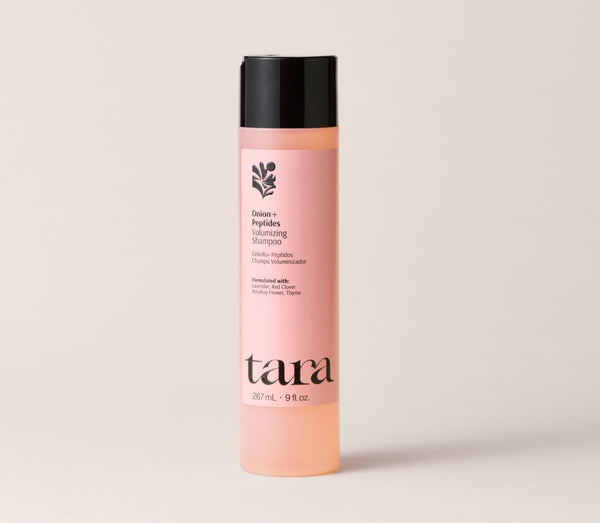
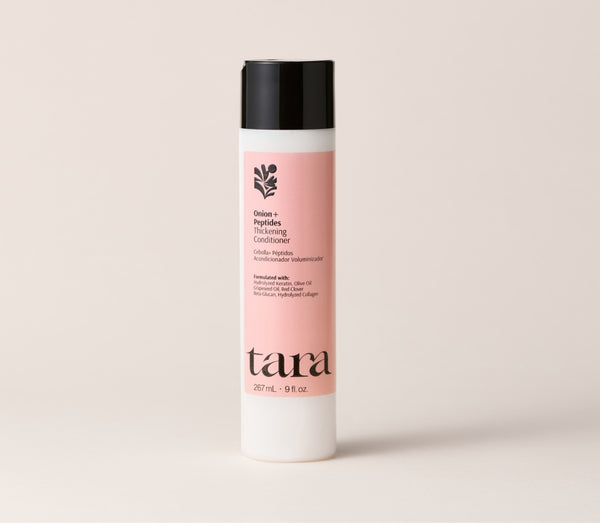
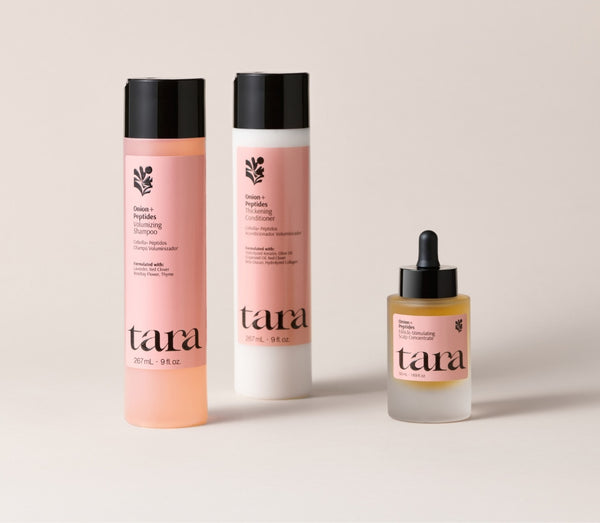
A scalp-first routine is the sensible way to look after the follicles you have during this phase. Lightweight scalp serums are made to sit on the scalp where the follicle lives. Where a density active has independent evidence, it is the peptide, not a botanical: a tonic combining biochanin A and acetyl-tetrapeptide-3 raised terminal hair count 8.3% against 8.7% for 3% minoxidil over 24 weeks, with no statistically significant difference between the two arms, in a triple-blind trial of 32 people with hereditary thinning (Lueangarun & Panchaprateep, J Clin Aesthet Dermatol 2020). That trial was in androgenetic alopecia, a different condition from postpartum shedding, so the peptide is density support during recovery, not a treatment for the shed itself. For the wider picture, see Tara's hair loss guide.
What it does not do
No product stops or cures postpartum shedding. It resolves on its own. The trigger is hormonal and the shed is self-limiting: it clears as estrogen settles and the hair cycle resynchronises, usually within a year. Tara's peptide actives, such as the biochanin-A and acetyl-tetrapeptide-3 stack, were measured in androgenetic alopecia, not postpartum telogen effluvium (Lueangarun & Panchaprateep, J Clin Aesthet Dermatol 2020); they support density during recovery, but they do not override the hormones or speed the cycle. A serum or shampoo cannot raise estrogen or hold a hair in the growing phase. What gentle scalp care does is keep fragile hair and the scalp in good condition while the body recovers.
The one shed that is not postpartum
One red flag is worth knowing. If shedding is still heavy a year out, or comes with exhaustion and feeling cold, that is not postpartum loss; get your thyroid and iron checked. Postpartum thyroid changes and low iron are common after birth, either can prolong the shed past its window, and a simple set of blood tests will find them.
Frequently asked questions
When does postpartum hair loss start and stop?
It starts around two to four months after birth, peaks near the third or fourth month, and settles on its own by roughly six to twelve months postpartum as the hair cycle resynchronises. This pattern is acute telogen effluvium, the synchronised shed that follows the estrogen drop after birth.
Is postpartum hair loss permanent?
No. It is a temporary release of hairs that pregnancy hormones held in the growing phase, not damage to the follicles. Density returns close to your pre-pregnancy normal within a year as the cycle resynchronises.
Can a serum or shampoo stop the shedding?
No product stops or cures postpartum shedding. The cause is the estrogen drop after birth, and it resolves on its own. Peptide density actives such as biochanin A and acetyl-tetrapeptide-3 were measured in hereditary thinning, not postpartum shedding (Lueangarun & Panchaprateep, J Clin Aesthet Dermatol 2020), so they support density during recovery rather than overriding the cause. Gentle scalp care, good nutrition and patience are what help while the cycle recovers.
Why does hair loss after pregnancy happen so suddenly?
High estrogen during pregnancy holds extra hairs in the growing phase. After birth estrogen falls, those hairs shift into resting together, and they shed as a wave a few months later, which is why it feels sudden rather than gradual. The clinical name for this synchronised shed is acute telogen effluvium.
What if the shedding does not stop after a year?
That is the one sign worth acting on. If shedding is still heavy a year out, or comes with exhaustion and feeling cold, that is not postpartum loss; get your thyroid and iron checked. Postpartum thyroid changes and low iron are common, treatable, and easily confirmed with a simple set of blood tests.