The US FDA recognises salicylic acid as a dandruff-control active at 1.8 to 3 percent in rinse-off shampoos (OTC Monograph M032, finalised 2021). That one line settles the confusion. Salicylic acid controls flakes, and the dose decides whether a product treats dandruff or simply clears build-up. Here is what causes dandruff, what controls it, and where a clarifying wash fits.
What causes dandruff and an itchy scalp
Dandruff is not a dirty scalp. It is driven by a yeast called Malassezia, which lives on almost everyone's scalp and feeds on sebum, the scalp's natural oil. In people prone to dandruff, that yeast breaks scalp oils into irritating by-products, the skin inflames, and cells shed faster than normal. The result is the familiar cycle: white or yellowish flakes, an itchy scalp, and an oily, coated feeling, worse in cold weather or when washing is infrequent. An oily scalp feeds the yeast, which is why dandruff and oiliness travel together.
What actually controls dandruff
The treatments with the strongest evidence work against the yeast or the over-shedding directly:
- Antifungals - ketoconazole, zinc pyrithione and selenium sulfide - target Malassezia itself. Ketoconazole is the reference medicated active, and an antifungal is the route that matters when flaking is persistent.
- Salicylic acid at 1.8 to 3 percent is recognised by the US FDA for dandruff control (Monograph M032, 2021). It is a lipophilic beta-hydroxy acid that penetrates sebum-rich follicles and loosens the bonds holding flakes together. In one controlled trial, 3 percent salicylic acid combined with ciclopirox matched prescription ketoconazole 2 percent on dandruff scores at day 29 - though that reflects the combination, not salicylic acid alone (Squire & Goode, J Dermatolog Treat 2002; industry-supported, disclosed).
- Seborrheic dermatitis and scalp psoriasis are medical conditions, not dandruff. Stubborn redness and greasy scale point to the first; thick, silvery, well-defined plaques point to the second. A dermatologist treats them, often with prescription actives.
Controlling dandruff means reducing the yeast or the shedding, and the dose on the label licenses the claim.
Where a clarifying wash fits
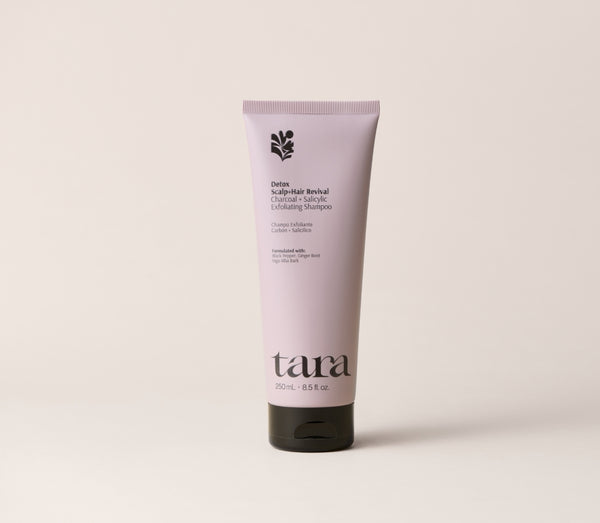
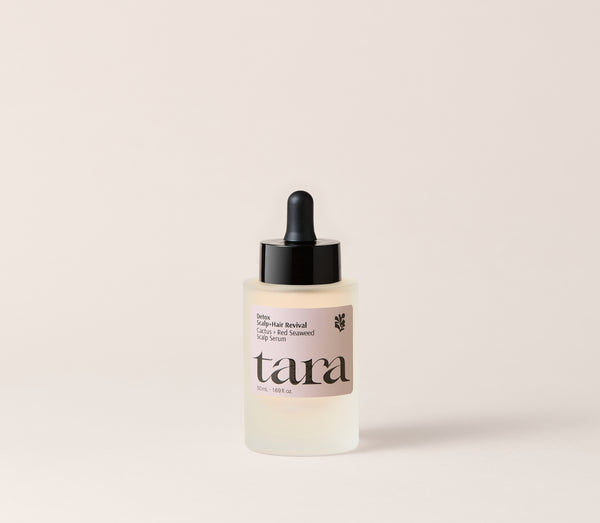
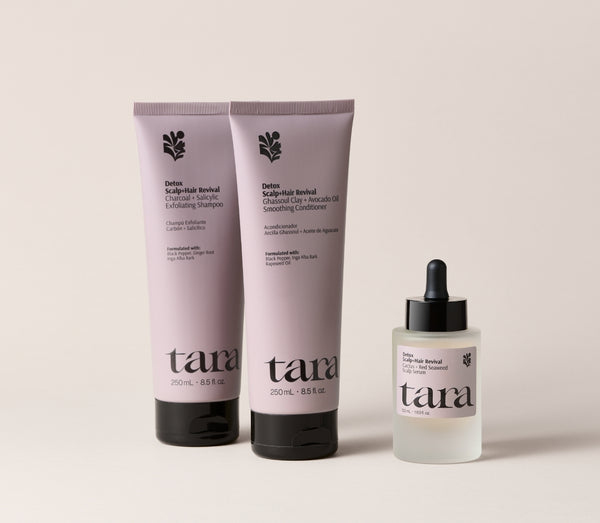
Before a medicated antifungal sits a useful step: clearing the oil and build-up that feed the cycle. TARA's detox shampoo is salicylic acid at 0.4 percent. That is below the 1.8 percent the FDA recognises for dandruff. It is a clarifier - it lifts build-up. It is not an anti-dandruff treatment. At 0.4 percent, salicylic acid lifts and exfoliates the build-up that traps the follicle: it loosens dead skin and dissolves the oil-and-keratin plug at the root, leaving an oily, flake-prone scalp genuinely clean. Ghassoul, a lacustrine stevensite clay, adsorbs surface sebum during the wash, and a TRPM8 cooling agent eases the itch sensation. This is a clarifier for a flaky, oily, build-up-prone scalp - not a medicated antifungal. Our scalp detox guide shows how a reset wash fits a weekly routine, and our piece on oils for dandruff covers the gentler remedies that help and the ones that backfire.
What it does not do
Two claims do not hold. First, at 0.4 percent salicylic acid does not control dandruff. The FDA's recognised threshold is 1.8 percent (Monograph M032, 2021), and a clarifying dose sits well below it. It lifts build-up - that is the verb the evidence supports, and the only one we use.
Second, charcoal does not detox the follicle. An independent dermatology review found no clinical evidence for charcoal's cosmetic claims (Sanchez et al., Clin Dermatol 2020), and cosmetic charcoal particles are one to two orders of magnitude too large to enter the follicle (Patzelt et al., J Control Release 2011). Charcoal binds oil on the surface during the wash and rinses away - the sensory signal of a deep cleanse, not an active that reaches the follicle.
A simple routine and how often to wash
- If dandruff is persistent, lead with a medicated antifungal shampoo - ketoconazole, zinc pyrithione or selenium sulfide - two to three times a week, left on a few minutes so the active can work.
- A clarifying wash sits alongside it, once or twice a week, to lift build-up and control oil - not to treat the dandruff.
- Massage into the scalp, not just the lengths. Use fingertips, never nails, and do not over-wash, which irritates an already itchy scalp.
- Give any routine three to four weeks before judging it. Flaking settles gradually, not overnight.
Frequently asked questions
What is the most effective dandruff treatment?
For ordinary dandruff, a medicated antifungal shampoo is the most evidence-backed route - ketoconazole, zinc pyrithione or selenium sulfide - used two to three times a week and left on a few minutes. Salicylic acid at 1.8 to 3 percent is also recognised by the US FDA for dandruff control (Monograph M032, 2021). Give any approach three to four weeks before judging it.
Does a salicylic acid shampoo treat dandruff?
The dose decides. The US FDA recognises salicylic acid for dandruff control at 1.8 to 3 percent (Monograph M032, 2021). Below that threshold, salicylic acid is a clarifier: it loosens flakes and dissolves the oil-and-keratin build-up around the follicle, but it does not treat dandruff. Check the percentage on the label.
Does TARA's detox shampoo treat dandruff?
No. It is salicylic acid at 0.4 percent, below the 1.8 percent the FDA recognises for dandruff. It is a clarifier: at that dose, salicylic acid lifts and exfoliates the build-up that traps the follicle. For persistent dandruff, use a medicated antifungal shampoo or see a dermatologist.
Does activated charcoal detox the scalp or follicle?
No. Charcoal does not detox the follicle. An independent dermatology review found no clinical evidence for charcoal's cosmetic claims (Sanchez et al., Clin Dermatol 2020), and cosmetic charcoal particles are far too large to enter the follicle (Patzelt et al., J Control Release 2011). Charcoal binds oil on the surface during a wash and rinses away - a sensory cue of cleansing, not a follicle detox.
When should I see a dermatologist about dandruff?
When your scalp is very red, greasy and inflamed (seborrheic dermatitis), when you have thick, silvery scales or well-defined plaques (scalp psoriasis), or when there is hair loss, weeping, pain or no improvement after a month of consistent care. These are medical conditions a dermatologist treats, often with prescription actives.